
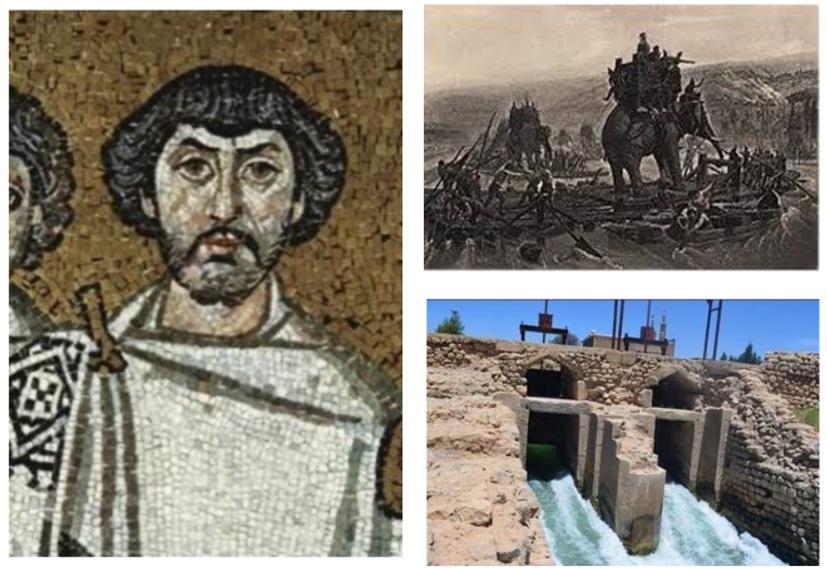

Water Conflicts: From Ancient to Modern Times and in the Future
Andreas N. Angelakis 1,2 , Mohammad Valipour 3,*, Abdelkader T. Ahmed 4,5 , Vasileios Tzanakakis 6, Nikolaos V. Paranychianakis 7, Jens Krasilnikoff 8, Renato Drusiani 9, Larry Mays 10 , Fatma El Gohary 11, Demetris Koutsoyiannis 12 , Saifullah Khan 13 and Luigi Joseph Del Giacco 14
Abstract: Since prehistoric times, water conflicts have occurred as a result of a wide range of tensions and/or violence, which have rarely taken the form of traditional warfare waged over water resources alone. Instead, water has historically been a (re)source of tension and a factor in conflicts that start for other reasons. In some cases, water was used directly as a weapon through its ability to cause damage through deprivation or erosion or water resources of enemy populations and their armies. However, water conflicts, both past and present, arise for several reasons; including territorial disputes, fight for resources, and strategic advantage. The main reasons of water conflicts are usually delimitation of boundaries, waterlogging (e.g., dams and lakes), diversion of rivers flow, running water, food, and political distresses. In recent decades, the number of human casualties caused by water conflicts is more than that of natural disasters, indicating the importance of emerging trends on water wars in the world. This paper presents arguments, fights, discourses, and conflicts around water from ancient times to the present. This diachronic survey attempts to provide water governance alternatives for the current and future.
Keywords: water conflict; water policy; water tension; water violence; water management; water crises; water arguments; water politics; water mafia; water scarcity
To read the full article, please click on
/wp-content/uploads/2026/07/Water%20Conflict%20from%20ancient%20Time%20.pdf
^
Water Conflicts: From Ancient to Modern Times and in the Future
Andreas N. Angelakis 1,2 , Mohammad Valipour 3,*, Abdelkader T. Ahmed 4,5 , Vasileios Tzanakakis 6, Nikolaos V. Paranychianakis 7, Jens Krasilnikoff 8, Renato Drusiani 9, Larry Mays 10 , Fatma El Gohary 11, Demetris Koutsoyiannis 12 , Saifullah Khan 13 and Luigi Joseph Del Giacco 14
Abstract: Since prehistoric times, water conflicts have occurred as a result of a wide range of tensions and/or violence, which have rarely taken the form of traditional warfare waged over water resources alone. Instead, water has historically been a (re)source of tension and a factor in conflicts that start for other reasons. In some cases, water was used directly as a weapon through its ability to cause damage through deprivation or erosion or water resources of enemy populations and their armies. However, water conflicts, both past and present, arise for several reasons; including territorial disputes, fight for resources, and strategic advantage. The main reasons of water conflicts are usually delimitation of boundaries, waterlogging (e.g., dams and lakes), diversion of rivers flow, running water, food, and political distresses. In recent decades, the number of human casualties caused by water conflicts is more than that of natural disasters, indicating the importance of emerging trends on water wars in the world. This paper presents arguments, fights, discourses, and conflicts around water from ancient times to the present. This diachronic survey attempts to provide water governance alternatives for the current and future.
Keywords: water conflict; water policy; water tension; water violence; water management; water crises; water arguments; water politics; water mafia; water scarcity
To read the full article, please click on
/wp-content/uploads/2026/07/Water%20Conflict%20from%20ancient%20Time%20.pdf
^
