

Türkiye-Iraq Water-Energy Cooperation is a critical hydro-strategic step
Dursun Yıldız
Director
Hydropolitics Academy
November 8 2025
Turkish, Iraqi ministers sign mechanism enabling implementation of 2024 water agreement, opening door for Turkish companies to modernize Iraq’s water infrastructure through oil-linked funding
Türkiye and Iraq signed a “mechanism document” on Sunday 2 November 2025 for the financing of cooperation projects in the field of water as part of a broader framework agreement between the two countries.
Turkish Foreign Minister Hakan Fidan and Iraqi Deputy Prime Minister and Foreign Minister Fuad Hussein signed the “Mechanism Document for the Financing of Projects Under the Framework Agreement on Water Cooperation Between the Government of the Republic of Türkiye and the Government of the Republic of Iraq.” This is an concrete implementation step of the “Water Cooperation Framework Agreement,” signed during Turkish President Recep Tayyip Erdogan’s visit to Baghdad in 2024.
Under the mechanism, infrastructure modernization and construction projects aimed at the efficient, effective, and sustainable use of Iraq’s water resources will be undertaken by Turkish companies, with financing to be provided through a system based on Iraqi oil sales.
Drought in the Region
Through this arrangement, Türkiye aims to enhance its contribution to improving Iraq’s water infrastructure and increasing the efficiency of its water resource management.
Decline in water resources in the region due to global climate change and the resulting water stress also felt in Türkiye.
This agreement moves water negotiations beyond the traditional water-sharing framework and instead outlines a vision for the most efficient and collaborative use of water in the region. The agreement ultimately aims to maximize the efficiency of water resources through joint projects.
Under the agreement, Türkiye will increase its contribution to the development of Iraq’s water infrastructure and the more efficient use of its water resources. The “Framework Agreement on Water Cooperation,” signed on April 22, 2024, and the “Financing Mechanism” document, signed on November 2, 2025, signal the beginning of a new strategic era in economic and trade relations between the two countries.
The agreement will play a role in increasing mutual cooperation and trust between the two countries on water management. The ultimate goal of the signed agreement is to ensure more efficient use of water in the region. This will be achieved not only through water sharing negotiations but also through an innovative approach to cooperation in the water-energy field. Iraq’s Development Pathway project will also play a significant role in this vision of cooperation between the two countries. In April 2024, a multilateral memorandum of understanding on the IDRP was signed between Türkiye, Iraq, Qatar, and the UAE.
The project’s Iraq-Türkiye connection holds significant potential as a “shortcut” in Asian/European logistics. This project has the potential to enhance economic infrastructure and logistics integration between Türkiye and Iraq. For Türkiye, this project offers the opportunity to function as a logistical bridge and offers economic development potential for Iraq. However, it should not be overlooked that the project’s success depends on financing, security, and geopolitical parameters.
A Regional Cooperation Vision
The simultaneous implementation of the Türkiye-Iraq Water and Energy Cooperation Framework Agreement (2024) with the Development Pathway Project is no coincidence; it demonstrates that the cooperation is being addressed with a broad regional vision. There is also a project in the region, such as the GAP, that will support the development of this cooperation. Combining the agricultural production capacity of the GAP with the export infrastructure provided by the Development Pathway could create a new logistics route for agricultural and industrial exports.
Coordination of Energy and Water Management, along with the Development Pathway, will create a crucial dynamic for regional development. This vision will present a strategic opportunity for Türkiye and Iraq in terms of ensuring the integration of water and energy security, which are key to economic growth in the region, and the establishment of an international logistics route.
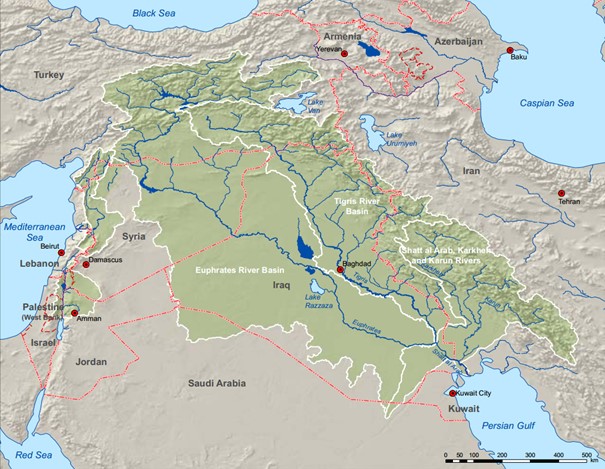
This approach moves Türkiye-Iraq relations away from traditional cross-border water diplomacy and toward a multidimensional water-energy-transportation axis. However, the implementation of this approach in the region also carries certain hydrological, geopolitical, security, and financial risks. Türkiye recognizes the Euphrates and Tigris river basins as a single basin. The only agreement for this basin is the 1987 Protocol on Economic Cooperation between Türkiye and Syria, under which Türkiye committed to maintaining an annual flow rate of 500 m³/s in the Euphrates tributary on the Syrian border. Following this protocol, according to the 1989 Syria-Iraq Water Sharing Agreement signed in Damascus, Syria committed to releasing 58% of the water coming from Türkiye to Iraq.
Türkiye has not officially recognized this agreement. It has been argued that a third-party jurisdiction over the international status of the Euphrates could not be established without Türkiye’s participation. Therefore, the 1989 Damascus Agreement was binding only between Syria and Iraq and did not create any obligations for Türkiye under international law. However, due to internal instability in Iraq after 2003 and the Syrian civil war after 2011, technical committee meetings were not held, and the measurement and sharing of Euphrates River flows effectively ceased.
The ongoing political uncertainty in Syria appears likely to delay the determination of the water to be released from the Euphrates to Iraq. In this case, Türkiye-Syria water-energy cooperation will be conducted through the Tigris River waters, and the signing of a trilateral agreement will take time. This creates the risk that uncertainty regarding Iraq’s use of the Euphrates waters will continue beyond Türkiye’s control. Overcoming the thresholds created by these risks will be directly related to a trilateral water management agreement in the basin and the elimination of political uncertainty in the basin.
^
Türkiye-Iraq Water-Energy Cooperation is a critical hydro-strategic step
Dursun Yıldız
Director
Hydropolitics Academy
November 8 2025
Turkish, Iraqi ministers sign mechanism enabling implementation of 2024 water agreement, opening door for Turkish companies to modernize Iraq’s water infrastructure through oil-linked funding
Türkiye and Iraq signed a “mechanism document” on Sunday 2 November 2025 for the financing of cooperation projects in the field of water as part of a broader framework agreement between the two countries.
Turkish Foreign Minister Hakan Fidan and Iraqi Deputy Prime Minister and Foreign Minister Fuad Hussein signed the “Mechanism Document for the Financing of Projects Under the Framework Agreement on Water Cooperation Between the Government of the Republic of Türkiye and the Government of the Republic of Iraq.” This is an concrete implementation step of the “Water Cooperation Framework Agreement,” signed during Turkish President Recep Tayyip Erdogan’s visit to Baghdad in 2024.
Under the mechanism, infrastructure modernization and construction projects aimed at the efficient, effective, and sustainable use of Iraq’s water resources will be undertaken by Turkish companies, with financing to be provided through a system based on Iraqi oil sales.
Drought in the Region
Through this arrangement, Türkiye aims to enhance its contribution to improving Iraq’s water infrastructure and increasing the efficiency of its water resource management.
Decline in water resources in the region due to global climate change and the resulting water stress also felt in Türkiye.
This agreement moves water negotiations beyond the traditional water-sharing framework and instead outlines a vision for the most efficient and collaborative use of water in the region. The agreement ultimately aims to maximize the efficiency of water resources through joint projects.
Under the agreement, Türkiye will increase its contribution to the development of Iraq’s water infrastructure and the more efficient use of its water resources. The “Framework Agreement on Water Cooperation,” signed on April 22, 2024, and the “Financing Mechanism” document, signed on November 2, 2025, signal the beginning of a new strategic era in economic and trade relations between the two countries.
The agreement will play a role in increasing mutual cooperation and trust between the two countries on water management. The ultimate goal of the signed agreement is to ensure more efficient use of water in the region. This will be achieved not only through water sharing negotiations but also through an innovative approach to cooperation in the water-energy field. Iraq’s Development Pathway project will also play a significant role in this vision of cooperation between the two countries. In April 2024, a multilateral memorandum of understanding on the IDRP was signed between Türkiye, Iraq, Qatar, and the UAE.
The project’s Iraq-Türkiye connection holds significant potential as a “shortcut” in Asian/European logistics. This project has the potential to enhance economic infrastructure and logistics integration between Türkiye and Iraq. For Türkiye, this project offers the opportunity to function as a logistical bridge and offers economic development potential for Iraq. However, it should not be overlooked that the project’s success depends on financing, security, and geopolitical parameters.
A Regional Cooperation Vision
The simultaneous implementation of the Türkiye-Iraq Water and Energy Cooperation Framework Agreement (2024) with the Development Pathway Project is no coincidence; it demonstrates that the cooperation is being addressed with a broad regional vision. There is also a project in the region, such as the GAP, that will support the development of this cooperation. Combining the agricultural production capacity of the GAP with the export infrastructure provided by the Development Pathway could create a new logistics route for agricultural and industrial exports.
Coordination of Energy and Water Management, along with the Development Pathway, will create a crucial dynamic for regional development. This vision will present a strategic opportunity for Türkiye and Iraq in terms of ensuring the integration of water and energy security, which are key to economic growth in the region, and the establishment of an international logistics route.
This approach moves Türkiye-Iraq relations away from traditional cross-border water diplomacy and toward a multidimensional water-energy-transportation axis. However, the implementation of this approach in the region also carries certain hydrological, geopolitical, security, and financial risks. Türkiye recognizes the Euphrates and Tigris river basins as a single basin. The only agreement for this basin is the 1987 Protocol on Economic Cooperation between Türkiye and Syria, under which Türkiye committed to maintaining an annual flow rate of 500 m³/s in the Euphrates tributary on the Syrian border. Following this protocol, according to the 1989 Syria-Iraq Water Sharing Agreement signed in Damascus, Syria committed to releasing 58% of the water coming from Türkiye to Iraq.
Türkiye has not officially recognized this agreement. It has been argued that a third-party jurisdiction over the international status of the Euphrates could not be established without Türkiye’s participation. Therefore, the 1989 Damascus Agreement was binding only between Syria and Iraq and did not create any obligations for Türkiye under international law. However, due to internal instability in Iraq after 2003 and the Syrian civil war after 2011, technical committee meetings were not held, and the measurement and sharing of Euphrates River flows effectively ceased.
The ongoing political uncertainty in Syria appears likely to delay the determination of the water to be released from the Euphrates to Iraq. In this case, Türkiye-Syria water-energy cooperation will be conducted through the Tigris River waters, and the signing of a trilateral agreement will take time. This creates the risk that uncertainty regarding Iraq’s use of the Euphrates waters will continue beyond Türkiye’s control. Overcoming the thresholds created by these risks will be directly related to a trilateral water management agreement in the basin and the elimination of political uncertainty in the basin.
PDF VERSION
^
