
COP31 POLICY BRIEF
Dursun Yıldız
Hydropolitics Expert
Director
Hydropolitics Association (HPA), Türkiye
COP31 Antalya | 9–20 November 2026
November 2 2026
COP31 Antalya’s ambition to become an Implementation COP represents an important opportunity to move international climate policies from commitments to concrete action. However, the absence of Water Security as a standalone priority among the ten priority areas announced for COP31 raises serious concerns about the comprehensiveness and effectiveness of its implementation agenda.
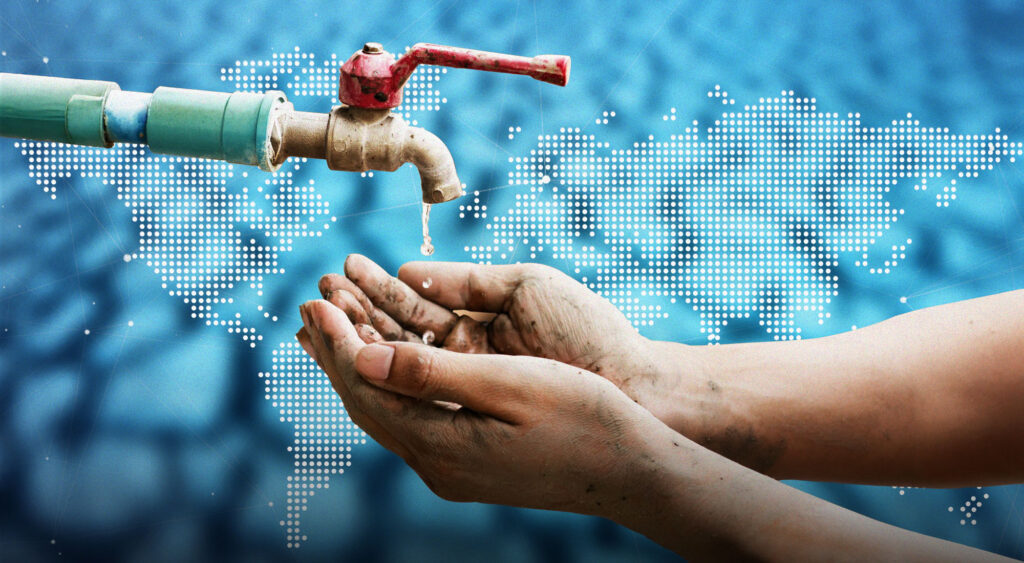
Many of the most significant impacts of climate change are experienced through the hydrological cycle. Increasing droughts, floods, changing precipitation patterns, deteriorating water quality, and ecosystem degradation directly threaten water security, food production, energy systems, public health, and socioeconomic stability.
Water security is therefore not merely another sector affected by climate change. It is a fundamental prerequisite for successful climate adaptation, food security, energy transition, ecosystem protection, and social resilience.
Although water-related issues are addressed within several elements of the COP31 agenda, their inclusion under broader sectoral priorities cannot fully substitute for a comprehensive and integrated water security framework.

Dursun Yıldız President of HPA
The absence of water security as a distinct implementation priority risks weakening policy coherence, reducing the visibility of water-related climate finance, and limiting the monitoring of measurable adaptation outcomes.
1. Water Security Is at the Heart of the Climate Crisis
Climate change is fundamentally altering the spatial and temporal distribution of water resources.
Rising temperatures affect evaporation and evapotranspiration, while changing precipitation patterns influence water availability, groundwater recharge, flood frequency, and drought severity.
These changes have far-reaching implications for agricultural productivity, hydropower generation, urban water supply, public health, and aquatic ecosystems.
Consequently, climate resilience cannot be achieved without sustainable and integrated water resources management.
Water security must be recognized not as a secondary component of climate policy, but as one of its central implementation priorities.
2. Five Major Risks of Excluding Water Security as a Standalone Priority
2.1. Weakening Political and Institutional Visibility
When water security is distributed across multiple sectoral priorities, the development of coherent and integrated water policies becomes more difficult.
Fragmented approaches may weaken coordination among water authorities, agricultural institutions, energy agencies, environmental organizations, and climate policymakers.
Without a clearly defined water security priority, institutional responsibilities may remain dispersed, reducing accountability and implementation effectiveness.
2.2. Marginalization of Water Investments in Climate Finance
The absence of a dedicated water security priority may reduce the visibility of water-related adaptation investments within international climate finance mechanisms.
Projects addressing drought management, urban water supply resilience, groundwater sustainability, flood risk reduction, and basin-scale adaptation may face additional difficulties in competing for limited financial resources.
A standalone water security priority would help strengthen investment planning, improve access to climate finance, and support the development of measurable financing targets.
2.3. Insufficient Monitoring of Measurable Outcomes
An Implementation COP should be evaluated through tangible and verifiable results rather than commitments alone.
Without dedicated water security targets and indicators, it will be difficult to assess how effectively COP31 contributes to reducing water-related climate vulnerabilities.
Key questions may remain unanswered:
- How many people have gained more climate-resilient access to safe water?
- How many river basins have implemented effective drought and flood adaptation measures?
- How much climate adaptation finance has actually been disbursed for water security?
- To what extent have water-related climate risks been reduced?
Without clear indicators, progress may remain difficult to evaluate.
2.4. Limited Attention to Transboundary Water Cooperation
Climate change is increasing pressure on shared river basins through changes in water availability, demand, seasonal flows, and ecosystem requirements.
These challenges require stronger cooperation among riparian countries.
However, without water security as a clearly identified implementation priority, Transboundary Water Cooperation may receive insufficient political attention and financial support.
Joint hydrological monitoring, early warning systems, climate risk assessments, and basin-wide adaptation programmes should become integral components of international climate action.
2.5. Weakening the Integrated WEFE Nexus Approach
The Water–Energy–Food–Ecosystems (WEFE) Nexus approach recognizes the strong interdependencies among water resources, energy production, food systems, and ecosystems.
Water plays a critical role in connecting these sectors, although the relationships are multidirectional.
Treating water primarily as a component of agricultural, energy, or environmental policies risks overlooking important cross-sectoral trade-offs and opportunities.
An integrated WEFE Nexus approach can improve climate investment decisions, reduce resource conflicts, and strengthen long-term regional resilience.
3. Can an Implementation COP Succeed Without Water Security?
The credibility of COP31 as an Implementation COP will depend on its ability to transform climate commitments into financed, measurable, and accountable actions.
However, successful climate implementation cannot be assessed solely through emission reductions, renewable energy deployment, or financial commitments.
Reducing drought vulnerability, strengthening urban water supply systems, improving agricultural water productivity, protecting aquatic ecosystems, and enhancing basin-level resilience must also be recognized as essential indicators of implementation success.
Without clearly defined water security targets, financing arrangements, and monitoring mechanisms, COP31’s implementation agenda will remain incomplete in a strategically important area.
There can be no comprehensive climate resilience without water security.
4. Five Policy Recommendations from the Water Policy Association
The Water Policy Association calls upon the COP31 Presidency and participating Parties to consider the following actions:
Recommendation 1 — Recognize Water Security as a Standalone Implementation Priority
Water security should be incorporated into COP31’s Action Agenda as a distinct priority or established as a cross-cutting implementation programme with equivalent political visibility.
This would strengthen policy coherence and ensure that water-related climate risks receive appropriate institutional attention.
Recommendation 2 — Establish a Water Security Implementation Initiative
COP31 should encourage the establishment of a Water Security Implementation Initiative aligned with existing UNFCCC mechanisms.
The initiative should promote voluntary participation, practical cooperation, investment-ready projects, and measurable adaptation outcomes.
It should complement rather than duplicate existing international climate and water governance arrangements.
Recommendation 3 — Strengthen Water Adaptation Finance Tracking
Water-related climate adaptation finance should be identified and monitored through transparent and comparable reporting mechanisms.
Financial pledges, approved allocations, contractual commitments, and actual disbursements should be distinguished to improve accountability and prevent double counting.
Recommendation 4 — Promote Basin-Based Climate Adaptation
COP31 should encourage national and transboundary river basin adaptation programmes.
These programmes should support joint climate risk assessments, hydrological data sharing, early warning systems, sustainable groundwater management, and coordinated investment planning.
Basin-based approaches can strengthen climate resilience while supporting regional cooperation and sustainable development.
Recommendation 5 — Integrate the WEFE Nexus into Climate Implementation
The WEFE Nexus approach should be systematically incorporated into climate adaptation planning, investment appraisal, and implementation programmes.
This would help identify intersectoral dependencies, manage competing resource demands, improve investment efficiency, and protect ecosystem functions.
5. Conclusions and Call to Action
Over more than three decades, the COP process has established an important institutional and legal framework for global climate governance.
COP31 Antalya now presents an opportunity to accelerate the implementation of existing climate commitments and translate international agreements into tangible results.
However, the absence of water security as a standalone priority among COP31’s ten priority areas represents a significant gap that should be addressed.
This is not merely a sector-specific concern.
Water security is directly connected to food production, energy security, ecosystem sustainability, public health, economic development, and climate justice.
Recognizing water security as a distinct implementation priority would strengthen COP31’s credibility as an Implementation COP and contribute to more integrated, measurable, and effective climate action.
The Hydropolitics Association calls upon the COP31 Presidency to elevate water security within the Action Agenda and support its implementation through dedicated targets, accessible financing, basin-scale cooperation, and transparent accountability mechanisms.
“No Successful Climate Implementation Without Water Security.”
Water security must move from a fragmented sectoral concern to a measurable and integrated priority of global climate action.
Hydropolitics Association (SPD)
Türkiye | COP31 Antalya, November 2026