

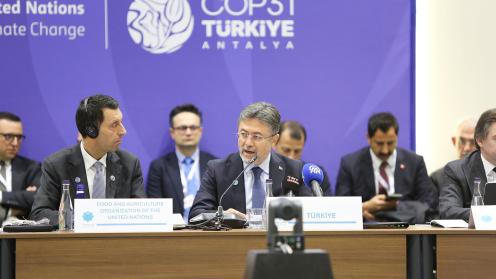
10 November 2026 | Antalya, Türkiye
This event took place during
UN Climate Change Conference – Antalya, November 2026
Global conflicts, economic uncertainty, energy security concerns and growing distrust among countries mean that multilateral cooperation continues to be strained.
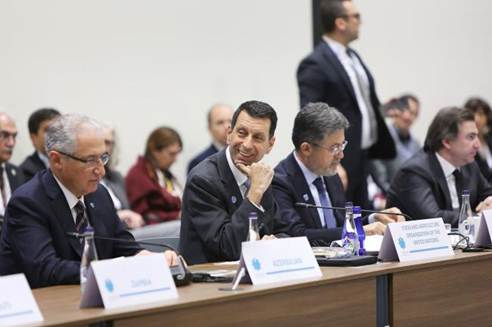
Kaveh Zahedi, Assistant Director-General and Director of the Office of Climate Change, Biodiversity and Environment, FAO
Momentum on adaptation and mitigation through the transformation of agriculture and food systems has steadily increased under the Food and Agriculture for Sustainable Transformation (FAST) Partnership, established at COP 27 in Sharm El-Sheikh. COP 29 saw the launch of the Baku Harmoniya Climate Initiative for Farmers, followed by Resilient Agriculture Investment for net Zero land degradation (RAIZ) at COP 30. Building on these efforts, COP 31 marked the launch of the Turquoise Nexus Initiative (TNI), a country-led platform connecting food security, water management, and climate action.
Opening the event, Kaveh Zahedi, Assistant Director-General and Director of the Office of Climate Change, Biodiversity and Environment, Food and Agriculture Organization of the UN (FAO), welcomed Türkiye’s joining of the FAST Partnership this year and emphasized the need to connect agriculture, water, and climate priorities, which often remain fragmented.
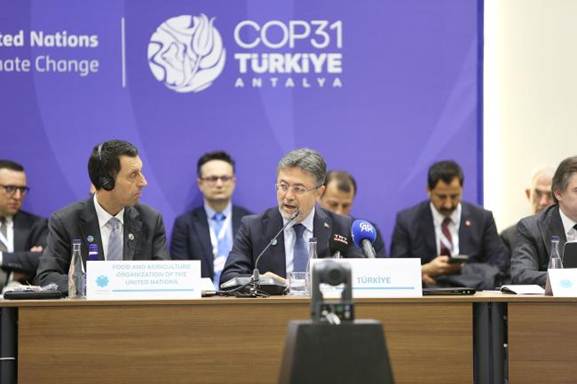
İbrahim Yumaklı, Minister of Agriculture and Forestry, Türkiye
İbrahim Yumaklı, Minister of Agriculture and Forestry, Türkiye, underscored the growing vulnerability of food systems to climate and supply chain disruptions. He described TNI as a platform to strengthen existing initiatives rather than duplicate them and called for country priorities to guide implementation and for cooperation to deliver tangible benefits to farmers.
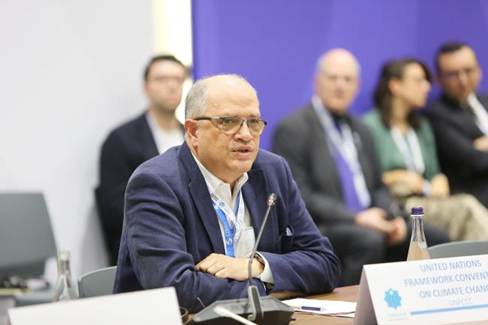
Youssef Nassef, Director, Adaptation Division, UNFCCC Secretariat
Youssef Nassef, Director, Adaptation Division, UNFCCC Secretariat, outlined three pillars of TNI: aligning policies, namely national adaptation plans (NAPs) and Nationally Determined Contributions (NDCs), connecting research and policy, and mobilizing finance. He highlighted traditional agricultural knowledge alongside emerging technologies and noted that TNI would be submitted to the FAST Partnership Board for endorsement as flagship programe in January 2027. “Let turquoise be the color of the future, where farmers survive and thrive together,” he concluded.
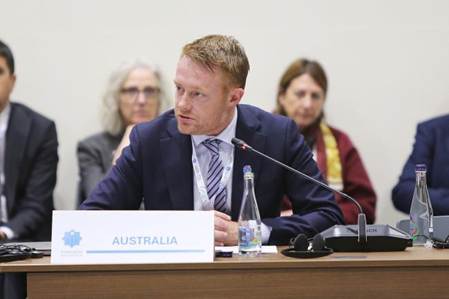
Nick Blong, First Assistant Secretary, Sustainability, Climate and Strategy Division, Department of Agriculture, Fisheries and Forestry, Australia
Nick Blong, First Assistant Secretary, Sustainability, Climate and Strategy Division, Department of Agriculture, Fisheries and Forestry, Australia, representing the COP 31 Presidency of Negotiations, welcomed integrated approaches to agriculture and water management, highlighting investments in drought resilience, sustainable farming research, and Indigenous knowledge.
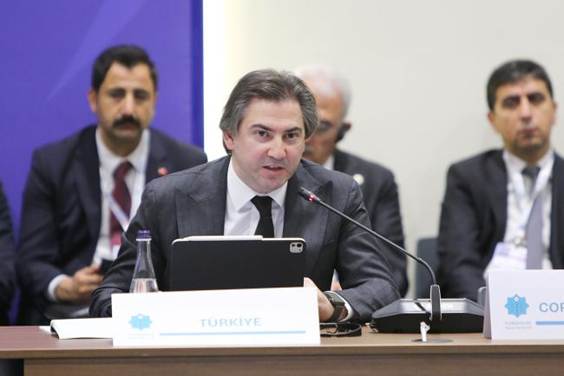
Ahmet Bağcı, Deputy Minister of Agriculture and Forestry, Türkiye
Ahmet Bağcı, Deputy Minister of Agriculture and Forestry, Türkiye, then presented the TNI, identifying fragmented policies as a major obstacle to addressing interconnected food, water, and climate challenges. Highlighting Türkiye’s experience with drought early warning systems, agricultural planning, and irrigation modernization, he announced a call for expressions of interest, with country case studies and technical exchanges beginning in 2027 and a pipeline of bankable projects envisaged by 2030.
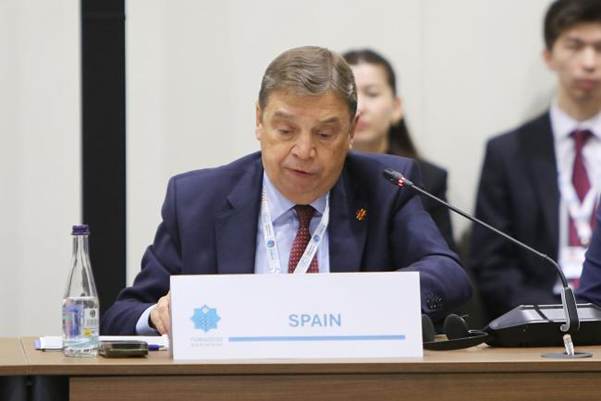
Belén Citoler, Director, World Rural Forum
Belén Citoler, Director, World Rural Forum, emphasized that family farmers already manage food, water, and climate challenges together. Drawing on examples from North Africa and Togo, she called for farmer organizations to participate directly in policy and financing decisions.
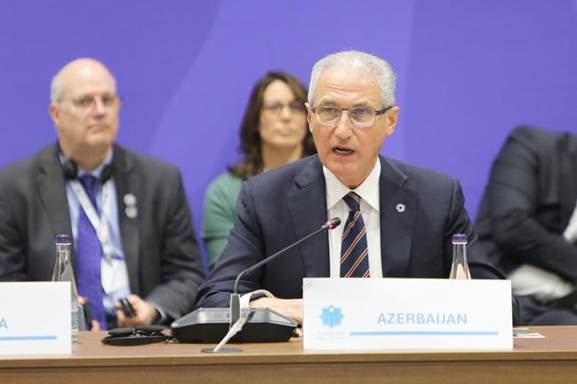
Mukhtar Babayev, Representative of the President of Azerbaijan on Climate Issues and COP 29 President
During a ministerial segment moderated by Yumaklı, Mukhtar Babayev, Representative of the President of Azerbaijan on Climate Issues and COP 29 President, warned that rising temperatures, droughts, and water stress threaten agricultural production. He also highlighted complementarities between the Baku Harmoniya Climate Initiative for Farmers and the TNI.
Ilyas Moussa Dawaleh, Minister of Economy and Finance, in charge of Industry, Djibouti
Ilyas Moussa Dawaleh, Minister of Economy and Finance, in charge of Industry, Djibouti, reflected on his country’s situation as highly dependent on food imports. He lamented how the recent geopolitical developments affecting food and energy prices coupled with climate change impacts have turned into structural problems rather than mere development issues.
Luis Planas Puchades, Minister of Agriculture, Fisheries and Food, Spain
Luis Planas Puchades, Minister of Agriculture, Fisheries and Food, Spain, underscored agriculture’s role on the frontlines of climate action and the role of farmers and communities as agents of change. Referring to national investment plans, he reminded everyone that food security is not about producing more, but about ensuring sustainable, nutritious, and resilient food systems against shocks.
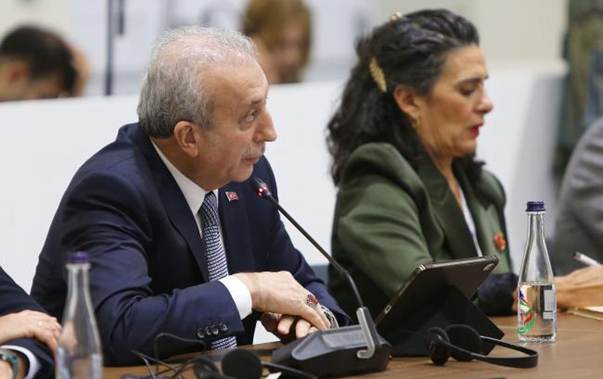
Mehmet Mehdi Eker, former Minister of Food, Agriculture and Livestock, Türkiye
Mehmet Mehdi Eker, former Minister of Food, Agriculture and Livestock, Türkiye, listed three priorities for the TNI: aligning food production with water resources that are sustainably available at the basin level; making finance accessible before the next shock; and designing inclusion into finance from the outset, drawing attention to gender equality and small scale farmers.
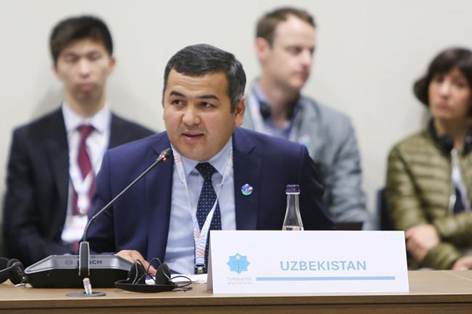
Alisher Nematullaevich Shukurov, Deputy Minister of Agriculture, Uzbekistan
Alisher Nematullaevich Shukurov, Deputy Minister of Agriculture, Uzbekistan, lamented how water and climate actions are still designed and implemented in isolation. Noting how agriculture contributes 19 percent to Uzbekistan’s economy, but uses 90 percent of national water resources, the majority of which are transboundary, he called for policy coherence, knowledge exchange, and investment opportunities.
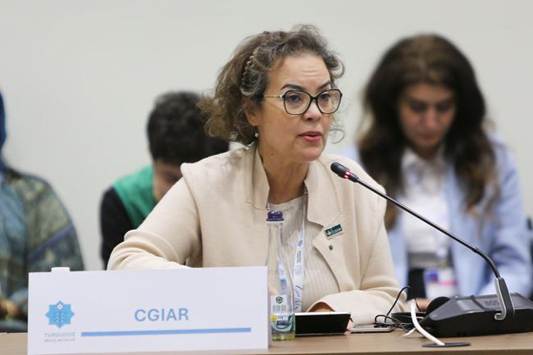
Ismahane Elouafi, Executive Managing Director, CGIAR
Kaveh Zahedi facilitated the final session giving the floor to key partner organizations.
Ismahane Elouafi, Executive Managing Director, CGIAR, drew attention to the importance of adaptation in building food systems, giving farmers options, and helping governments anticipate changes. Sharing successful experiences from Ethiopia and Cambodia, she urged locally-led adaptation that benefits connected systems.
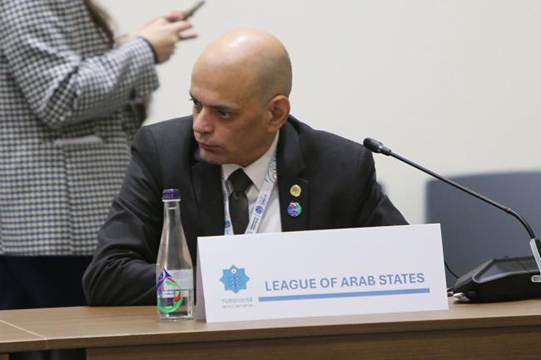
Mahmoud Fathallah, Chief Economist, Director of the Department of Environmental, Meteorological Affairs, League of Arab States
Mahmoud Fathallah, Chief Economist, Director of the Department of Environmental, Meteorological Affairs, League of Arab States, highlighted the Cairo Declaration from 2019 as an appropriate anchor for TNI in the region. He further called for the initiative to support countries in integrating the nexus into NDCs and adaptation plans.
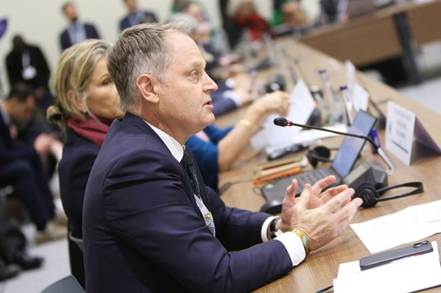
Mark Smith, Director General, IWMI
Mark Smith, Director General, International Water Management Institute (IWMI), cautioned that efficiency alone cannot ensure water security. He called on governments to improve water monitoring, including through digital tools, align allocation systems with incentives, and integrate scientific evidence, policy, and climate considerations into water management.
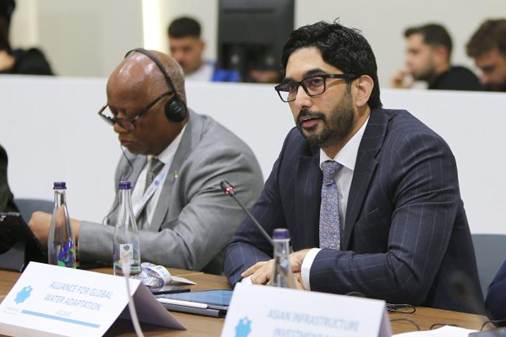
Idrees Malyar, Director, Water Resilience Tracker Initiative, AGWA
Idrees Malyar, Director, Water Resilience Tracker Initiative, Alliance for Global Water Adaptation (AGWA), identified three gaps in water resilience planning, between evidence and decisions, national plans and basin-level implementation, and priorities and financing. He stressed the need for anticipatory drought planning, stronger local coordination, and costed, time-bound investment plans.
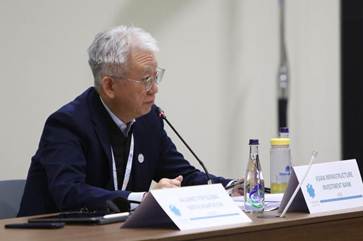
Hun Kim, Chief Partnerships Officer, AIIB
Hun Kim, Chief Partnerships Officer, Asian Infrastructure Investment Bank (AIIB), noted that nearly 70 percent of the Bank’s investments support climate action, predominantly mitigation. He highlighted a USD 300 million Nature Finance Accelerator, and called for new approaches to adaptation finance, including stronger project sustainability and greater access to grants and concessional funding.
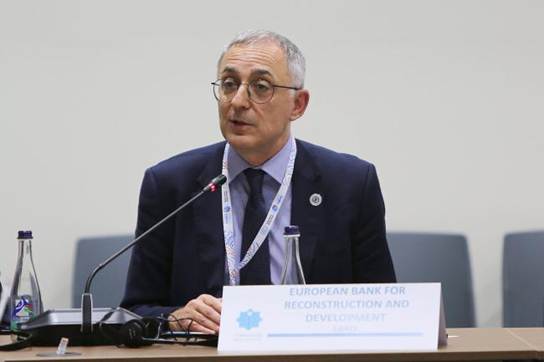
Gianpiero Nacci, Managing Director, Climate Strategy and Delivery, EBRD
Gianpiero Nacci, Managing Director, Climate Strategy and Delivery, European Bank for Reconstruction and Development (EBRD), welcomed TNI’s integrated approach to food security and competitiveness. He highlighted three priorities: advisory services linking data to investment decisions, tailored financial instruments, and aggregation mechanisms bringing together public and private actors to develop investment pipelines.
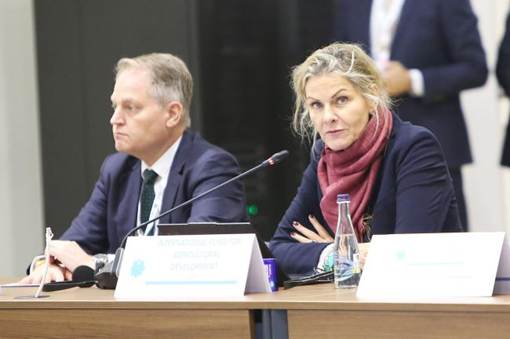
Pieternel Boogaard, Managing Director, Office of Technical Delivery, IFAD
Pieternel Boogaard, Managing Director, Office of Technical Delivery, International Fund for Agricultural Development (IFAD), emphasized the interconnected challenges of food, water, and climate facing smallholder farmers. She noted that over half of IFAD’s programme financing supports climate action and called for farmer-centered approaches.
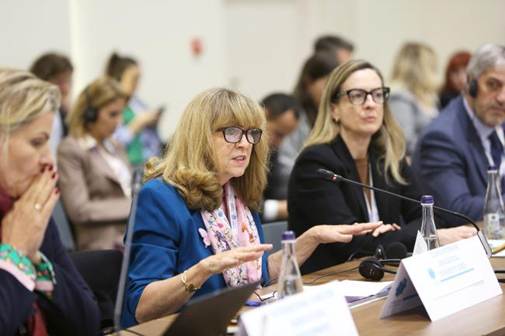
Astrid Schomaker, Executive Secretary, CBD
Astrid Schomaker, Executive Secretary, UN Convention on Biological Diversity (CBD), stressed the ecological foundations of food security and the need for closer coordination among the three Rio Conventions. She called for aligning financial flows and incentives with sustainability objectives, while empowering smallholder farmers through participatory decision-making.
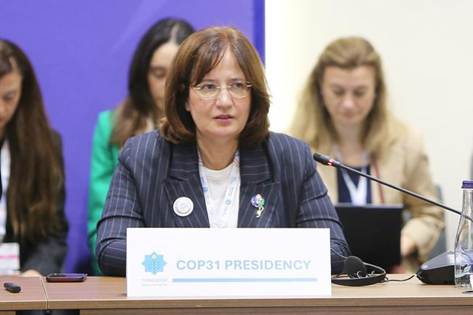
Fatma Varank, Deputy Minister of Environment, Urbanization and Climate Change, Türkiye, Chief Climate Change Negotiator for Türkiye, and COP 31 CEO
In closing remarks, Fatma Varank, Deputy Minister of Environment, Urbanization and Climate Change, Türkiye, Chief Climate Change Negotiator for Türkiye, and COP 31 CEO, underscored the need to integrate food, water, and climate priorities into NDCs and NAPs. She emphasized country-led solutions, stronger partnerships, and translating policy commitments into concrete investments through TNI.
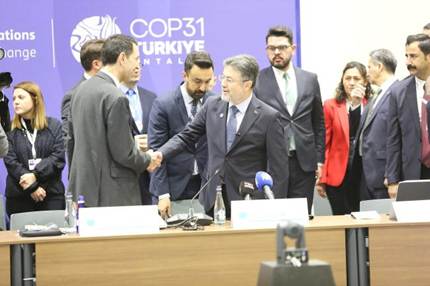
Organizer: Ministry of Agriculture and Forestry, Türkiye; COP31 Presidency; FAO; FAST Partnership
For more information: https://www.fao.org/climate-change/fao-at-cop31/the-turquoise-nexus-initiative/en
Contact: Giulia Galbiati, FAO I [email protected]; Fiona Bottigliero, FAO I [email protected]; FAST Partnership I [email protected]
Selected Images
Source:https://enb.iisd.org/launch-turquoise-nexus-initiative-cop31?utm_medium=email&utm_campaign=ENB%20Update%20-%2011%20November%202026&utm_content=ENB%20Update%20-%2011%20November%202026+CID_0f7d564448a1649375a6132b7e9bc7d7&utm_source=cm&utm_term=Read%20highlights%20and%20images


