

Dursun Yıldız
Director
Hydropolitics Academy
Large-scale land acquisitions (LSLAs), commonly referred to as land grabbing, have become a defining feature of agricultural investment in Africa since the mid-2000s. Although framed as land-based development initiatives, most of these deals are fundamentally about control over water resources. In regions characterized by water scarcity, climate variability, and weak governance, land acquisition has emerged as a powerful indirect mechanism for reallocating water away from smallholders and pastoralists toward commercial and export-oriented agriculture.
Land grabbing in Africa is inseparable from water grabbing. The transfer of land rights typically confers de facto water rights, enabling investors to appropriate surface water and groundwater with limited oversight. The result is growing inequality in water access, localized conflict, ecosystem degradation, and increased hydropolitical risk—particularly in transboundary basins.
Hydropolitical and Transboundary Dimensions
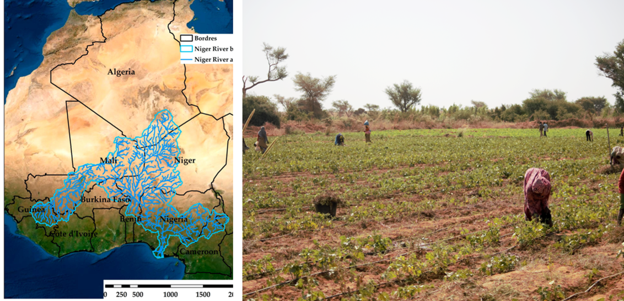
Many land deals are located in the transboundary river basins of the Nile, Niger, Zambezi, and Senegal. Uncoordinated abstraction can undermine basin-level agreements, shift power asymmetrically and trigger interstate tensions. Land deals thus create quiet hydropolitical externalities.
Land grabbing in Africa cannot be understood or governed without placing water rights at the center. As climate stress intensifies and competition grows, failure to regulate the land–water nexus risks deepening inequality, undermining food security, and destabilizing river basins. Effective policy must move beyond hectares and focus on hydrological power and the principle of allocation justice. From a hydropolitics perspective, land grabbing alters control over water, its allocation, and decision-making power regarding water use.
Unlike dams or inter-basin transfers, land-based water appropriation creates a structural asymmetry where private or foreign actors influence basin-scale water balances without being parties to transboundary agreements.
From Land to water
Over the past two decades, Africa has become a focal point for large-scale agricultural land investments driven by global food security concerns, water scarcity in investor countries, rising demand for biofuels and export-oriented crops, and weak land and water governance regimes in host states.
Although contracts are negotiated over land, the primary strategic asset is often reliable and low-cost water access—both surface water and groundwater. In practice, acquiring land near major rivers or aquifers grants long-term control over water flows, often exceeding the regulatory capacity of host governments.
Conclusions
In Africa, land grabbing is rarely just about hectares—it is about hydrological power. It should be noted that land governance without water governance is incomplete. Water scarcity transforms land investments into zero-sum games. Climate change demands anticipatory regulation, not reactive conflict management. Therefore, basin-scale coordination is essential
In many river basins, land grabbing functions as de facto water grabbing, reshaping power relations between upstream and downstream states, intensifying water security risks, and weakening existing transboundary water governance frameworks.
Land grabbing in Africa is not merely a land governance issue but a silent mechanism of transboundary water redistribution, accelerated by climate change, food security anxieties, and global investment dynamics.
Land grabbing in Africa is best understood as a hydropolitical process with transboundary consequences, not merely a land-use phenomenon. By reallocating water quietly through agricultural investments, it reshapes power relations, exacerbates climate vulnerability, and undermines existing water governance frameworks. Addressing this challenge requires reframing land deals as water-security decisions—subject to basin-wide oversight, transparency, and cooperative governance.
