


Trump wants Panama Canal for Energy Market
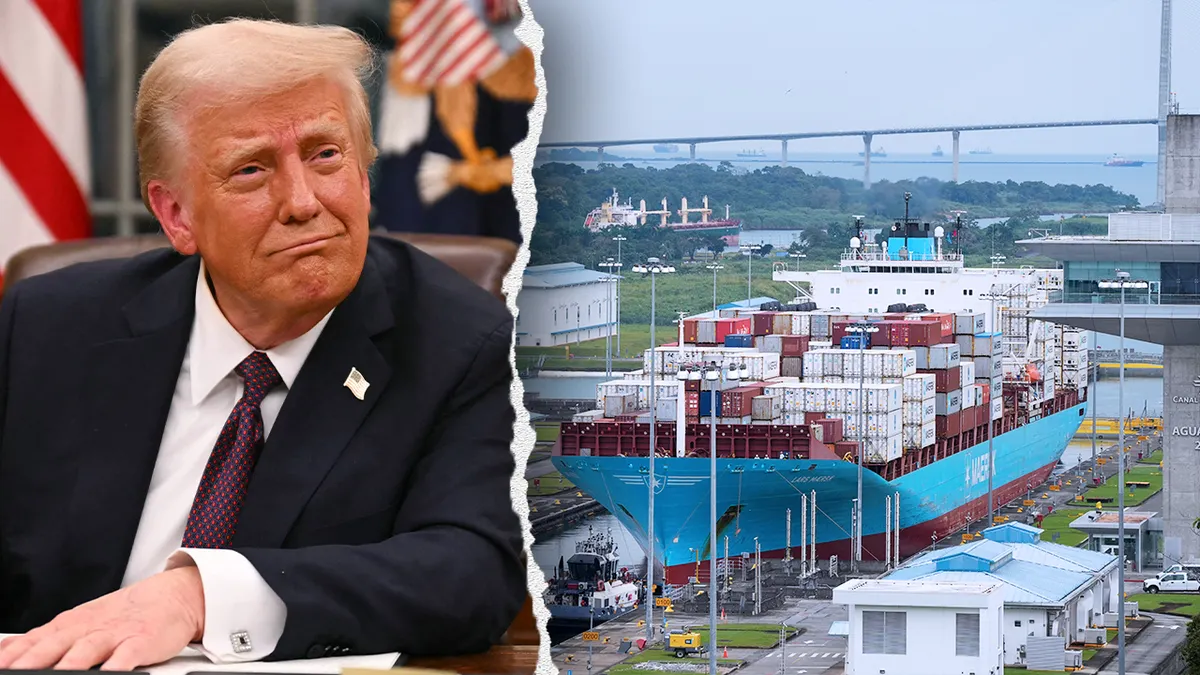
Trump’s goal: Control China through Panama and dominate the LNG Market in Asia-Pacific. We predicted new emerging LNG Geopolitics in the report we prepared 12 years ago. In 2022, the USA became the world’s top LNG exporter. USA increased rapidly market share in EU . Now it’s Asia Pacific’s turn
Dursun Yıldız
Director
Hydropolitics Academy
February 24 2025
Global demand for liquefied natural gas (LNG) is predicted to increase by more than 50% by 2040, as the industrial coal-to-gas transition accelerates in China and South East Asian countries use more LNG for their economic development.Global trade in LNG reached 500 million tonnes in 2025, from 397 million tonnes in 2022; the market is larger but tight LNG supplies constrain growth. The opening of new terminals in the USA and Qatar will expand the market.
Total LNG imports of China, Japan and South Korea, Taiwan and India account for approximately 57% of the world’s LNG supply. The shortest route to this market for tankers departing from the former Gulf of Mexico, now known as the American Gulf, where the USA’s LNG loading stations are located, is through the Panama Canal. The ship traffic of the Panama Canal is constantly increasing. For this reason, the decision to expand it was made in 2006. In 2016, the construction of the expansion of the Panama Canal was completed. However, as a result of the drought, the decrease in the water level in Gatun Lake, which is connected to the canal, puts pressure on the canal operation. In this case, ships have to wait 8-10 days. Many of the ships,tankers divert away from the Panama Canal to the Cape of Good Hope, at the southern tip of Africa.
The USA’s plans may also include building larger LNG tankers to take part in the Asian LNG market and making the Panama Canal suitable for the passage of these tankers. However, before this expense is incurred, the channel must belong to the USA. That’s why Trump has included the Panama Canal in his list of priorities.
China’s increasing interest in the Panama Canal
China’s strategic and economic interest in the Panama Canal is also effective in the US’s decision to seize the Panama Canal. Since China is a major manufacturing country that exports especially to the USA and Latin America, this channel has a critical place in China’s trade routes. Chinese goods can reach the east coast of the USA and Europe faster through the Panama Canal. Alternatively, it is also an important transit point for exports to South American countries. In addition, the Panama Canal functions as a strategic transit point within the scope of China’s global infrastructure project, the Belt and Road Initiative (BRI). The increasing Chinese influence in the region is effective in the USA’s decision regarding the Panama Canal, but the determining factor in the USA’s decision is the increasing need of the Energy Sector.

US LNG production and number of export terminals on the Gulf Coast are increasing
The increase in the number and capacity of natural gas liquefaction facilities in the United States has driven growth in global LNG trade. The increasing LNG demand in Europe due to the embargo on natural gas exports from Russia to the EU also contributed to the growth of this market. The number of LNG filling terminals in the USA is increasing rapidly. Plaquemines LNG, the eighth liquefied natural gas (LNG) export terminal of the USA, entered operation in December 2024. When the other stages of this terminal are completed, the total export capacity of the USA will increase to 15.4 billion cubic feet per day. When the other three US LNG export projects currently under construction (Golden Pass LNG, Rio Grande LNG and Port Arthur LNG) are completed, it is estimated that the LNG export capacity will increase to 21.2 billion cubic feet per day by 2028. This situation requires the USA to investigate new markets and the most suitable routes today.
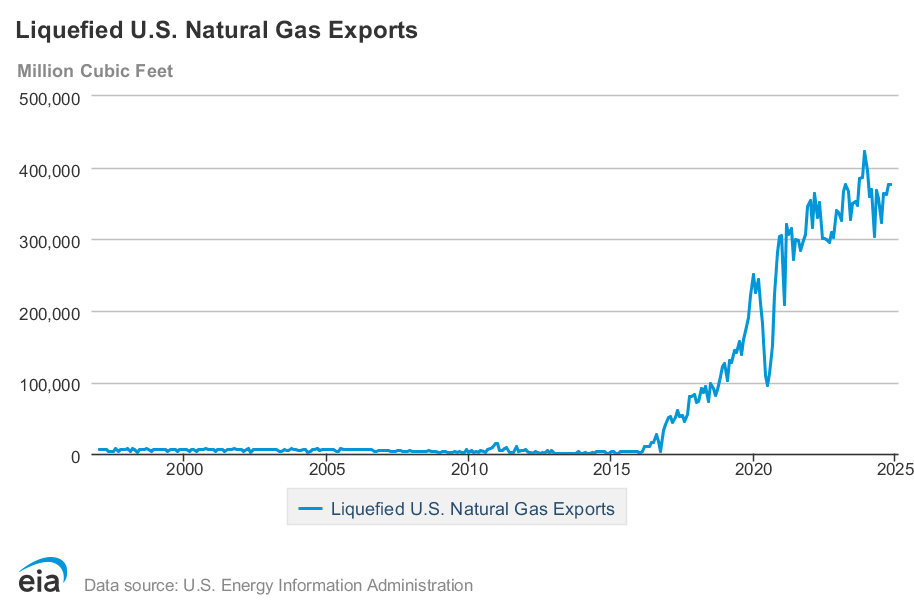
In 2022, the USA became the world’s top LNG exporter.
US LNG exports in 2022 are up 16% compared to 2021. In the first half of 2022, after the new LNG export facility came into operation, the United States became the world’s top LNG exporter for the first time. When one of the LNG export facilities in the USA went out of operation, Qatar and Australia remained the top two global LNG exporters in the second half of 2022.
Panama Canal is a key to US LNG Trade
The USA is the country with the largest share, carrying out 75 percent of the total cargo transportation in the canal. Currently, the Panama Canal has always been important for US trade in terms of cost, competitiveness and strategic importance. However, this importance has increased even more with the USA’s determined policy on LNG exports.
Working principle, transit time and fee of the Panama Canal
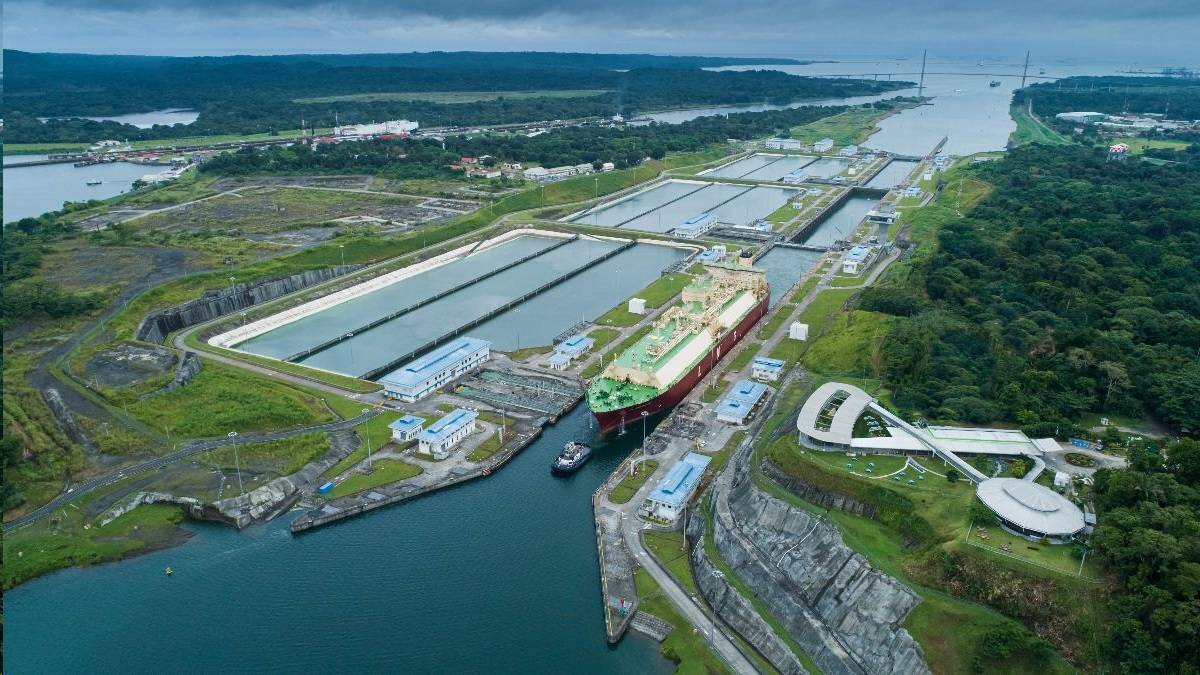
The Panama Canal works with a locked pool system that acts as an elevator, due to the height difference between the two oceans it connects. The ship entering the canal is raised and lowered at certain intervals along the canal, depending on the ocean it will travel to, to the water level and passage is ensured using the locked dock system. Ships enter the pool system three times along the canal. When they enter the pool at each point, the ship is raised by pumping water inside. In the reverse route, water is drawn from the pool where the ship is located and lowered to the same level as the waterway in which it will travel. It can take between 8 and 10 hours to cross the Panama Canal.
With the expansion project completed in 2016, the Panama Canal allowed the passage of Neopanamax class ships with a length of 366 m, a width of 51.25 m and a draft of 15 m. Sizes of U.S.-built LNG ships generally fall within these limitations, but Q-Max LNG tankers exceed the canal limitations. In addition to these restrictions, factors such as water levels and weather conditions in the Panama Canal may occasionally lead to passage restrictions. For example, due to the drought in 2024, there was a decrease in the passage of LNG ships.
The transit fee for a ship through the Panama Canal can go up to 300 thousand dollars, depending on the weight and type of cargo it carries and the size of the ship. In addition, additional fees may apply in some cases. These additional fees can start from 15 thousand dollars and increase. Additionally, the fees charged to ships wishing to make urgent passages can exceed millions of dollars. These fees are determined every year by the Panama Canal administration.
65% of the LNG Market is in Asia Pacific
In 2024, 55% of the USA’s total LNG exports went to Europe, 34% to Asia, 11% mostly to Latin America, and a few cargoes to the Middle East, especially Egypt and Jordan. The Asia-Pacific region has the largest share in global LNG imports. In 2023, approximately 65% of world LNG imports were realized by this region. The biggest importing countries of the market appear to be China, Japan and South Korea.
In the Asia-Pacific LNG market, the USA competes with Australia and Qatar, which have the advantage of geographical proximity to the market. Russia is also trying to create a space for itself in the market. On a company basis, Shell, Exxon Mobil, Total Energies and Asian-based giant energy companies are important players in the market.
Panama Canal expanded but still insufficient
LNG exports from the United States to Asia were not being considered when the Panama Canal expansion was planned and approved in 2006, and the United States was a major LNG importer that year. Today, the USA has become world’s top LNG exporter in the world and badly needs the management of the Panama Canal to reach the largest market in the shortest way. The Panama Canal Authority (ACP) manages the canal.
The expansion of the Panama Canal in 2016 to accommodate larger ships with larger beams and greater drafts was a big deal for LNG exporters looking to reduce their per-unit costs of delivering to Asia. But as increasing shipments aim to pass through the canal, waiting periods have also increased. This problem has led to a bottleneck that also poses a challenge for future projects hoping to minimize costs in a highly competitive global LNG market.
In 2012, the US Congress commissioned a report on the EU’s energy dependence on Russia and its reduction. Conditions have matured and the USA have moved the EU away from Russia’s energy dependence and tied it to itself facilitating the continuation of the Russia Ukraine war.With this geopolitical game, the USA created a large and permanent LNG market for itself in Europe. This development also relieved the US shale gas and shale oil sector, which is seeking to open up to foreign markets. The fact that natural gas prices in the EU are five times those of the USA has made the European market very attractive for the US Energy sector. Therefore Europe remained the preferred destination for US LNG exports.But new plans for new markets were needed for the US energy sector, which continued to develop rapidly as planned despite the European market. As a result, the USA also entered Far East Asia, the world’s largest LNG market. However, in that region, there are countries such as Malaysia, Indonesia, Russia, Qatar and Australia that offer low prices with the advantage of geographical proximity to the market. This situation has greatly increased the importance of the Panama Canal for US LNG exporters. President Trump made his statement to fulfill this importance as soon as possible. The Panama Canal would be under the control of the USA in any case.
In 2016, the canal was expanded and new passages were added to the canal. However, capacity may still be insufficient. The Panama Canal management imposes some restrictions due to reasons such as the increase in traffic and the decrease in the water level in the lake connected to the canal. In this case, ships that have made reservations primarily to secure channel transit slots can transit. An extra hefty fee is paid each time for this. These fees, which will be paid for priority passage reservations through the canal, are determined every year and increase the costs of US natural gas exporters. Due to long waiting times in the Panama Canal, ships are diverting to other routes.
All these developments mentioned above force the USA to take control of the canal. When the USA takes over the canal management, it may also consider investing in increasing the canal capacity. The canal reduces the Asian market route for approximately 5000 km. We discussed and explained in detail the impact of the USA’s shale gas revolution and the resulting increased LNG exports on energy geopolitics in the report we prepared in 2013. Developments revealed the accuracy of our projection. New LNG terminals will open in the USA during Trump’s second term. This gave Trump the important task of unlocking the Panama Canal, and President Trump made it clear that he would do what was necessary. This issue becomes even more important for the USA, considering China’s increasing economic and strategic interest in the Panama Canal.
^
Trump wants Panama Canal for Energy Market
Trump’s goal: Control China through Panama and dominate the LNG Market in Asia-Pacific. We predicted new emerging LNG Geopolitics in the report we prepared 12 years ago. In 2022, the USA became the world’s top LNG exporter. USA increased rapidly market share in EU . Now it’s Asia Pacific’s turn
Dursun Yıldız
Director
Hydropolitics Academy
February 24 2025
Global demand for liquefied natural gas (LNG) is predicted to increase by more than 50% by 2040, as the industrial coal-to-gas transition accelerates in China and South East Asian countries use more LNG for their economic development.Global trade in LNG reached 500 million tonnes in 2025, from 397 million tonnes in 2022; the market is larger but tight LNG supplies constrain growth. The opening of new terminals in the USA and Qatar will expand the market.
Total LNG imports of China, Japan and South Korea, Taiwan and India account for approximately 57% of the world’s LNG supply. The shortest route to this market for tankers departing from the former Gulf of Mexico, now known as the American Gulf, where the USA’s LNG loading stations are located, is through the Panama Canal. The ship traffic of the Panama Canal is constantly increasing. For this reason, the decision to expand it was made in 2006. In 2016, the construction of the expansion of the Panama Canal was completed. However, as a result of the drought, the decrease in the water level in Gatun Lake, which is connected to the canal, puts pressure on the canal operation. In this case, ships have to wait 8-10 days. Many of the ships,tankers divert away from the Panama Canal to the Cape of Good Hope, at the southern tip of Africa.
The USA’s plans may also include building larger LNG tankers to take part in the Asian LNG market and making the Panama Canal suitable for the passage of these tankers. However, before this expense is incurred, the channel must belong to the USA. That’s why Trump has included the Panama Canal in his list of priorities.
China’s increasing interest in the Panama Canal
China’s strategic and economic interest in the Panama Canal is also effective in the US’s decision to seize the Panama Canal. Since China is a major manufacturing country that exports especially to the USA and Latin America, this channel has a critical place in China’s trade routes. Chinese goods can reach the east coast of the USA and Europe faster through the Panama Canal. Alternatively, it is also an important transit point for exports to South American countries. In addition, the Panama Canal functions as a strategic transit point within the scope of China’s global infrastructure project, the Belt and Road Initiative (BRI). The increasing Chinese influence in the region is effective in the USA’s decision regarding the Panama Canal, but the determining factor in the USA’s decision is the increasing need of the Energy Sector.
US LNG production and number of export terminals on the Gulf Coast are increasing
The increase in the number and capacity of natural gas liquefaction facilities in the United States has driven growth in global LNG trade. The increasing LNG demand in Europe due to the embargo on natural gas exports from Russia to the EU also contributed to the growth of this market. The number of LNG filling terminals in the USA is increasing rapidly. Plaquemines LNG, the eighth liquefied natural gas (LNG) export terminal of the USA, entered operation in December 2024. When the other stages of this terminal are completed, the total export capacity of the USA will increase to 15.4 billion cubic feet per day. When the other three US LNG export projects currently under construction (Golden Pass LNG, Rio Grande LNG and Port Arthur LNG) are completed, it is estimated that the LNG export capacity will increase to 21.2 billion cubic feet per day by 2028. This situation requires the USA to investigate new markets and the most suitable routes today.
In 2022, the USA became the world’s top LNG exporter.
US LNG exports in 2022 are up 16% compared to 2021. In the first half of 2022, after the new LNG export facility came into operation, the United States became the world’s top LNG exporter for the first time. When one of the LNG export facilities in the USA went out of operation, Qatar and Australia remained the top two global LNG exporters in the second half of 2022.
Panama Canal is a key to US LNG Trade
The USA is the country with the largest share, carrying out 75 percent of the total cargo transportation in the canal. Currently, the Panama Canal has always been important for US trade in terms of cost, competitiveness and strategic importance. However, this importance has increased even more with the USA’s determined policy on LNG exports.
Working principle, transit time and fee of the Panama Canal
The Panama Canal works with a locked pool system that acts as an elevator, due to the height difference between the two oceans it connects. The ship entering the canal is raised and lowered at certain intervals along the canal, depending on the ocean it will travel to, to the water level and passage is ensured using the locked dock system. Ships enter the pool system three times along the canal. When they enter the pool at each point, the ship is raised by pumping water inside. In the reverse route, water is drawn from the pool where the ship is located and lowered to the same level as the waterway in which it will travel. It can take between 8 and 10 hours to cross the Panama Canal.
With the expansion project completed in 2016, the Panama Canal allowed the passage of Neopanamax class ships with a length of 366 m, a width of 51.25 m and a draft of 15 m. Sizes of U.S.-built LNG ships generally fall within these limitations, but Q-Max LNG tankers exceed the canal limitations. In addition to these restrictions, factors such as water levels and weather conditions in the Panama Canal may occasionally lead to passage restrictions. For example, due to the drought in 2024, there was a decrease in the passage of LNG ships.
The transit fee for a ship through the Panama Canal can go up to 300 thousand dollars, depending on the weight and type of cargo it carries and the size of the ship. In addition, additional fees may apply in some cases. These additional fees can start from 15 thousand dollars and increase. Additionally, the fees charged to ships wishing to make urgent passages can exceed millions of dollars. These fees are determined every year by the Panama Canal administration.
65% of the LNG Market is in Asia Pacific
In 2024, 55% of the USA’s total LNG exports went to Europe, 34% to Asia, 11% mostly to Latin America, and a few cargoes to the Middle East, especially Egypt and Jordan. The Asia-Pacific region has the largest share in global LNG imports. In 2023, approximately 65% of world LNG imports were realized by this region. The biggest importing countries of the market appear to be China, Japan and South Korea.
In the Asia-Pacific LNG market, the USA competes with Australia and Qatar, which have the advantage of geographical proximity to the market. Russia is also trying to create a space for itself in the market. On a company basis, Shell, Exxon Mobil, Total Energies and Asian-based giant energy companies are important players in the market.
Panama Canal expanded but still insufficient
LNG exports from the United States to Asia were not being considered when the Panama Canal expansion was planned and approved in 2006, and the United States was a major LNG importer that year. Today, the USA has become world’s top LNG exporter in the world and badly needs the management of the Panama Canal to reach the largest market in the shortest way. The Panama Canal Authority (ACP) manages the canal.
The expansion of the Panama Canal in 2016 to accommodate larger ships with larger beams and greater drafts was a big deal for LNG exporters looking to reduce their per-unit costs of delivering to Asia. But as increasing shipments aim to pass through the canal, waiting periods have also increased. This problem has led to a bottleneck that also poses a challenge for future projects hoping to minimize costs in a highly competitive global LNG market.
In 2012, the US Congress commissioned a report on the EU’s energy dependence on Russia and its reduction. Conditions have matured and the USA have moved the EU away from Russia’s energy dependence and tied it to itself facilitating the continuation of the Russia Ukraine war.With this geopolitical game, the USA created a large and permanent LNG market for itself in Europe. This development also relieved the US shale gas and shale oil sector, which is seeking to open up to foreign markets. The fact that natural gas prices in the EU are five times those of the USA has made the European market very attractive for the US Energy sector. Therefore Europe remained the preferred destination for US LNG exports.But new plans for new markets were needed for the US energy sector, which continued to develop rapidly as planned despite the European market. As a result, the USA also entered Far East Asia, the world’s largest LNG market. However, in that region, there are countries such as Malaysia, Indonesia, Russia, Qatar and Australia that offer low prices with the advantage of geographical proximity to the market. This situation has greatly increased the importance of the Panama Canal for US LNG exporters. President Trump made his statement to fulfill this importance as soon as possible. The Panama Canal would be under the control of the USA in any case.
In 2016, the canal was expanded and new passages were added to the canal. However, capacity may still be insufficient. The Panama Canal management imposes some restrictions due to reasons such as the increase in traffic and the decrease in the water level in the lake connected to the canal. In this case, ships that have made reservations primarily to secure channel transit slots can transit. An extra hefty fee is paid each time for this. These fees, which will be paid for priority passage reservations through the canal, are determined every year and increase the costs of US natural gas exporters. Due to long waiting times in the Panama Canal, ships are diverting to other routes.
All these developments mentioned above force the USA to take control of the canal. When the USA takes over the canal management, it may also consider investing in increasing the canal capacity. The canal reduces the Asian market route for approximately 5000 km. We discussed and explained in detail the impact of the USA’s shale gas revolution and the resulting increased LNG exports on energy geopolitics in the report we prepared in 2013. Developments revealed the accuracy of our projection. New LNG terminals will open in the USA during Trump’s second term. This gave Trump the important task of unlocking the Panama Canal, and President Trump made it clear that he would do what was necessary. This issue becomes even more important for the USA, considering China’s increasing economic and strategic interest in the Panama Canal.
^
