
Dursun Yıldız
Hydropolitics Association
October 8 2026
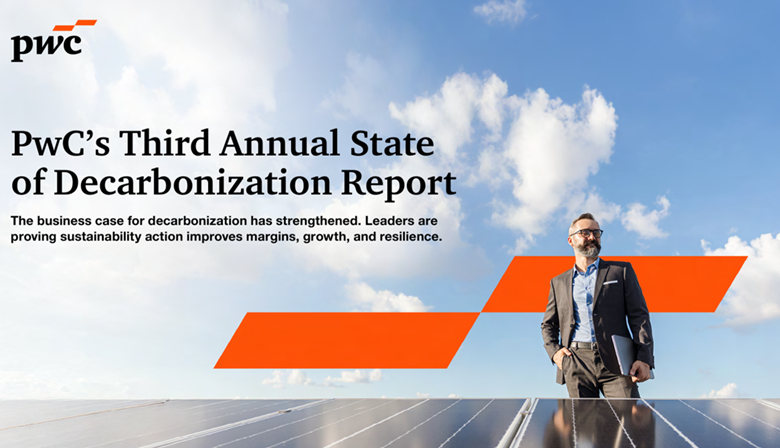
PwC’s *Third Annual State of Decarbonization Report* presents a more nuanced picture than the prevailing narrative suggesting companies are retreating from their climate commitments. Based on data from 3,547 companies—drawn from CDP responses, sustainability reports, and early CSRD disclosures—the report finds that while companies may be speaking more cautiously about sustainability, they are continuing their decarbonization efforts. Eighty-two percent of companies have maintained or accelerated their timelines for achieving climate goals; 23% have raised their targets, while 18% have lowered them.
From commitment to implementation
The report’s key message is that decarbonization has shifted from a matter of announcing ambitious targets to one of achieving actionable, financeable, and measurable progress. While the growth in the number of companies announcing new targets is slowing, the quality of these targets is improving, with more companies adopting science-based or externally verified goals. Progress in operational emissions continues as well: the proportion of companies on track to meet their Scope 1 and 2 targets is reaching 69%.
Scope 1 and energy remain the most challenging areas
Despite this progress, Scope 1 emissions remain the most difficult aspect of operational decarbonization. According to PwC, only 46% of companies are on track to meet their Scope 1 targets—even though Scope 1 accounts for more than 80% of the operational emissions of the companies analyzed. For this reason, leading companies are increasingly linking decarbonization to asset renewal cycles, capital expenditure plans, and energy efficiency investments.
Energy is also no longer merely a cost item; it is a matter of operational continuity and competitiveness. The report notes that electricity prices in the US have risen by 7% to 25% due to factors such as AI-driven demand for data centers, grid pressures, and regulatory changes. This landscape places energy resilience at the heart of decarbonization strategies.
Supply chain and product design are becoming critical
Reducing Scope 3 emissions depends on gaining a better understanding of the supply chain. According to a cross-sector sample of 158 Fortune 500 companies analyzed by PwC, only 18% of companies are able to consistently track activities and emissions beyond their Tier 1 suppliers. This visibility gap poses a significant risk for sectors where emissions are concentrated in the deeper tiers of the supply chain.
Product design is also emerging as a new frontier for decarbonization. Decisions regarding material selection, durability, reusability, repairability, and end-of-life design can determine the majority of a product’s environmental impact. The report notes that design decisions can influence up to 80% of a product’s environmental impact over its lifecycle, while products differentiated by sustainability features can drive revenue growth of 6% to 25%, depending on the sector and product type.
High potential in AI, but measurable impact remains limited
The report views artificial intelligence as both a risk and an opportunity regarding decarbonization. While 60% of companies report using AI for decarbonization efforts, less than 1% report that this usage has resulted in measurable emissions reductions. Similarly, although approximately 14% of companies state they use AI to improve sustainability or emissions reporting, only 2% report having integrated it at scale. Therefore, for artificial intelligence to create real value, it appears that a reliable data infrastructure, process integration, and measurable impact are more critical than isolated pilot projects.
Decarbonization is becoming part of the business economy.
PwC’s report demonstrates that decarbonization is no longer merely a matter of reputation or regulatory compliance; rather, it is a strategic area that must be managed alongside considerations of cost, growth, risk, capital allocation, and resilience. In the period ahead, the factor distinguishing companies will not be loud commitments, but rather the extent to which they integrate energy efficiency, supply chain visibility, product design, reliable data infrastructure, and AI-driven decision-making mechanisms into their business models.