

Climate Change and Transboundary Water Agreements
24 June 2026
Dursun Yıldız
Director
Hydropolitics Academy Center
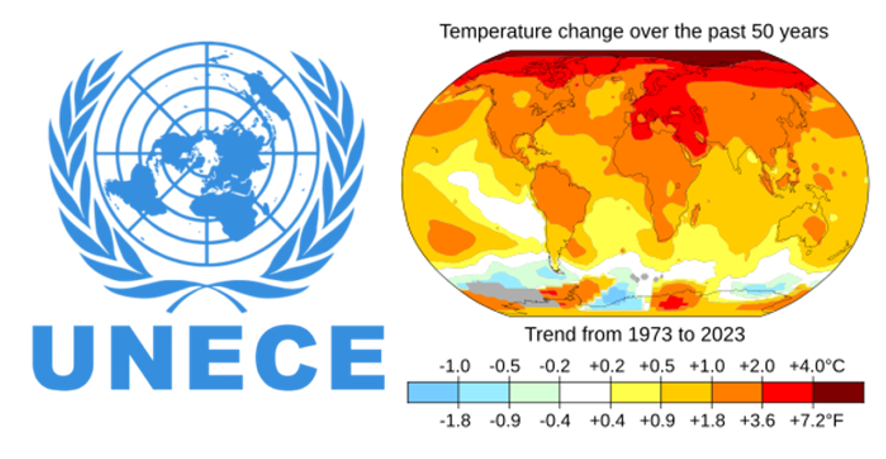
Climate change is emerging as one of the most significant challenges to the effectiveness of existing transboundary water agreements. Most international river treaties were negotiated based on historical hydrological conditions, assuming relatively stable river flows and predictable water availability. Today, increasing temperatures, changing precipitation patterns, prolonged droughts, severe floods, and glacier retreat are altering these assumptions.
In many transboundary basins, climate change is increasing hydrological uncertainty rather than simply reducing water availability. This creates new risks for water allocation arrangements based on fixed quantities of water. Agreements that allocate specific volumes may become difficult to implement when river flows decline significantly or fluctuate unpredictably.
As a result, modern transboundary water governance is shifting from water-sharing to benefit-sharing, from rigid allocation rules to adaptive management, and from sectoral approaches to integrated WEFE Nexus (Water-Energy-Food-Ecosystem Nexus) frameworks. Flexible agreements that include joint monitoring systems, data sharing, drought management plans, climate risk assessments, and periodic review mechanisms are becoming increasingly important.
Climate change also creates opportunities for greater regional cooperation. Joint reservoir operation, coordinated flood management, renewable energy integration, ecosystem protection, and climate adaptation projects can help riparian countries increase resilience while reducing the risk of conflict.
The future success of transboundary water agreements will depend not only on legal commitments but also on their ability to adapt to changing climatic conditions. Agreements that incorporate flexibility, scientific cooperation, and climate resilience measures are likely to be more sustainable and effective in the 21st century.
Climate change is transforming transboundary water management from a question of allocating water under certainty to managing shared risks and opportunities under uncertainty.
^
Climate Change and Transboundary Water Agreements
24 June 2026
Dursun Yıldız
Director
Hydropolitics Academy Center
Climate change is emerging as one of the most significant challenges to the effectiveness of existing transboundary water agreements. Most international river treaties were negotiated based on historical hydrological conditions, assuming relatively stable river flows and predictable water availability. Today, increasing temperatures, changing precipitation patterns, prolonged droughts, severe floods, and glacier retreat are altering these assumptions.
In many transboundary basins, climate change is increasing hydrological uncertainty rather than simply reducing water availability. This creates new risks for water allocation arrangements based on fixed quantities of water. Agreements that allocate specific volumes may become difficult to implement when river flows decline significantly or fluctuate unpredictably.
As a result, modern transboundary water governance is shifting from water-sharing to benefit-sharing, from rigid allocation rules to adaptive management, and from sectoral approaches to integrated WEFE Nexus (Water-Energy-Food-Ecosystem Nexus) frameworks. Flexible agreements that include joint monitoring systems, data sharing, drought management plans, climate risk assessments, and periodic review mechanisms are becoming increasingly important.
Climate change also creates opportunities for greater regional cooperation. Joint reservoir operation, coordinated flood management, renewable energy integration, ecosystem protection, and climate adaptation projects can help riparian countries increase resilience while reducing the risk of conflict.
The future success of transboundary water agreements will depend not only on legal commitments but also on their ability to adapt to changing climatic conditions. Agreements that incorporate flexibility, scientific cooperation, and climate resilience measures are likely to be more sustainable and effective in the 21st century.
Climate change is transforming transboundary water management from a question of allocating water under certainty to managing shared risks and opportunities under uncertainty.
^
