
HPA President Yıldız spoke at Erciyes Summit-1: “ Transboundary Water Agreements must be updated to reflect the changing climate”
Speaking at the “Climate Extremes and Water Management” panel at Erciyes Summit-1, Dursun Yıldız, President of the Water Policy Association, noted the growing impact of climate change on transboundary water management and stated that existing water agreements need to be revisited in light of changing hydrological conditions and new risks.
Yaren Tekin
Correspondent
July 21 2026
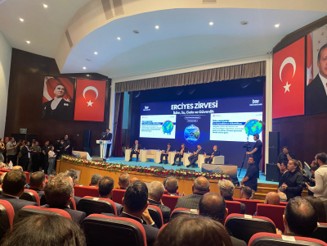
Climate change, water management, food security, and sustainable development were addressed at the Erciyes Summit-1, hosted by Erciyes University, Kayseri, Türkiye. Speaking at the summit, Dursun Yıldız, President of the Hydropolitics Association and a hydropolitics expert, stated that climate change directly impacts transboundary water management and emphasized the need to re-evaluate 20th-century water agreements in light of new conditions.
CLIMATE, WATER, AND FOOD AGENDAS ADDRESSED AT THE ERCIYES SUMMIT-1
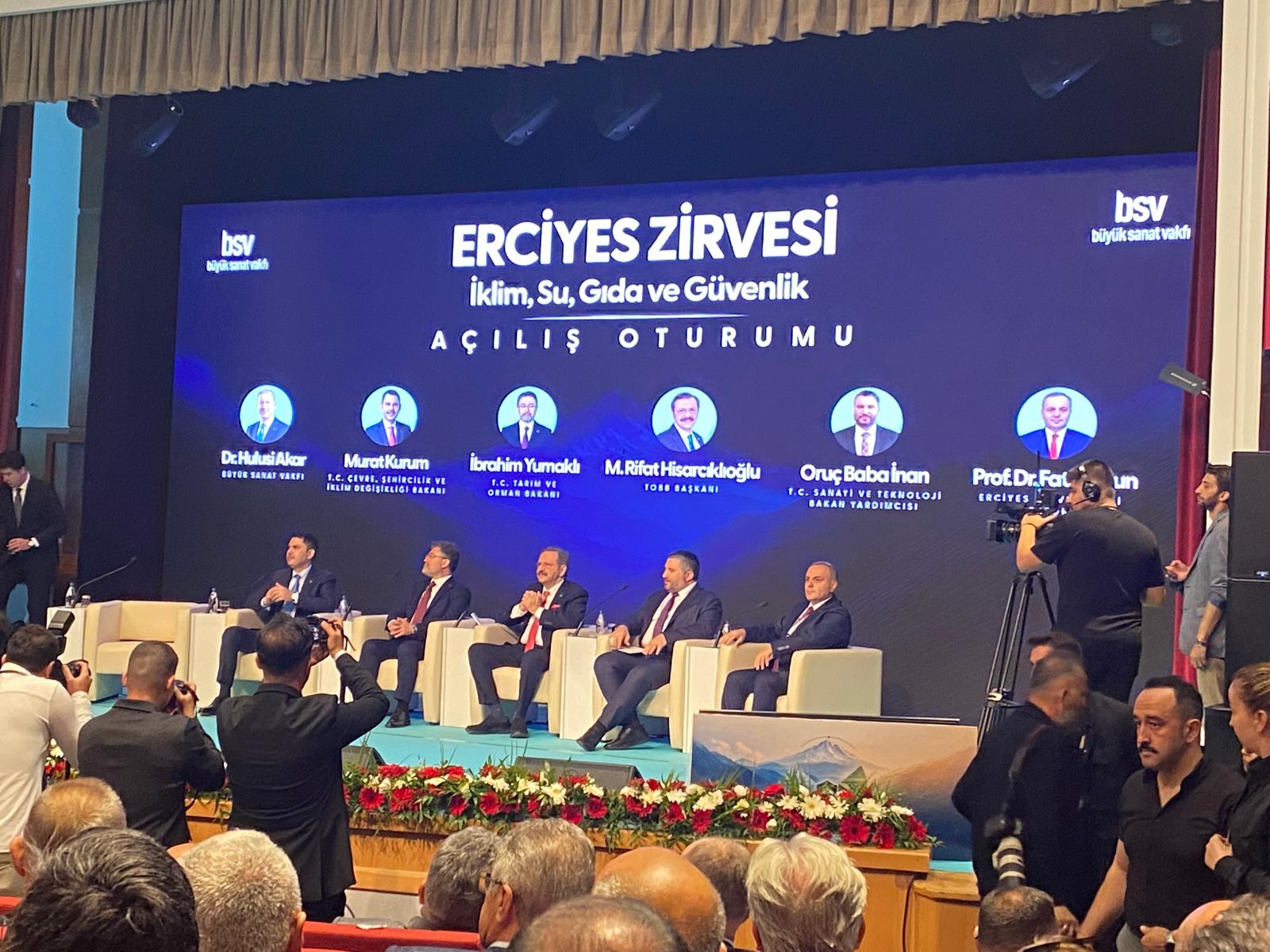
Erciyes Summit-1, hosted by Erciyes University and coordinated by AK Party Kayseri MP and Chairman of the TBMM National Defense Commission Dr. Hulusi Akar and AK Party Kayseri MP Ayşe Böhürler, has concluded. Held under the theme “Climate, Water, Food, and Security,” the summit examined the topics of climate change, water security, food supply, and sustainable development from a multidimensional perspective.
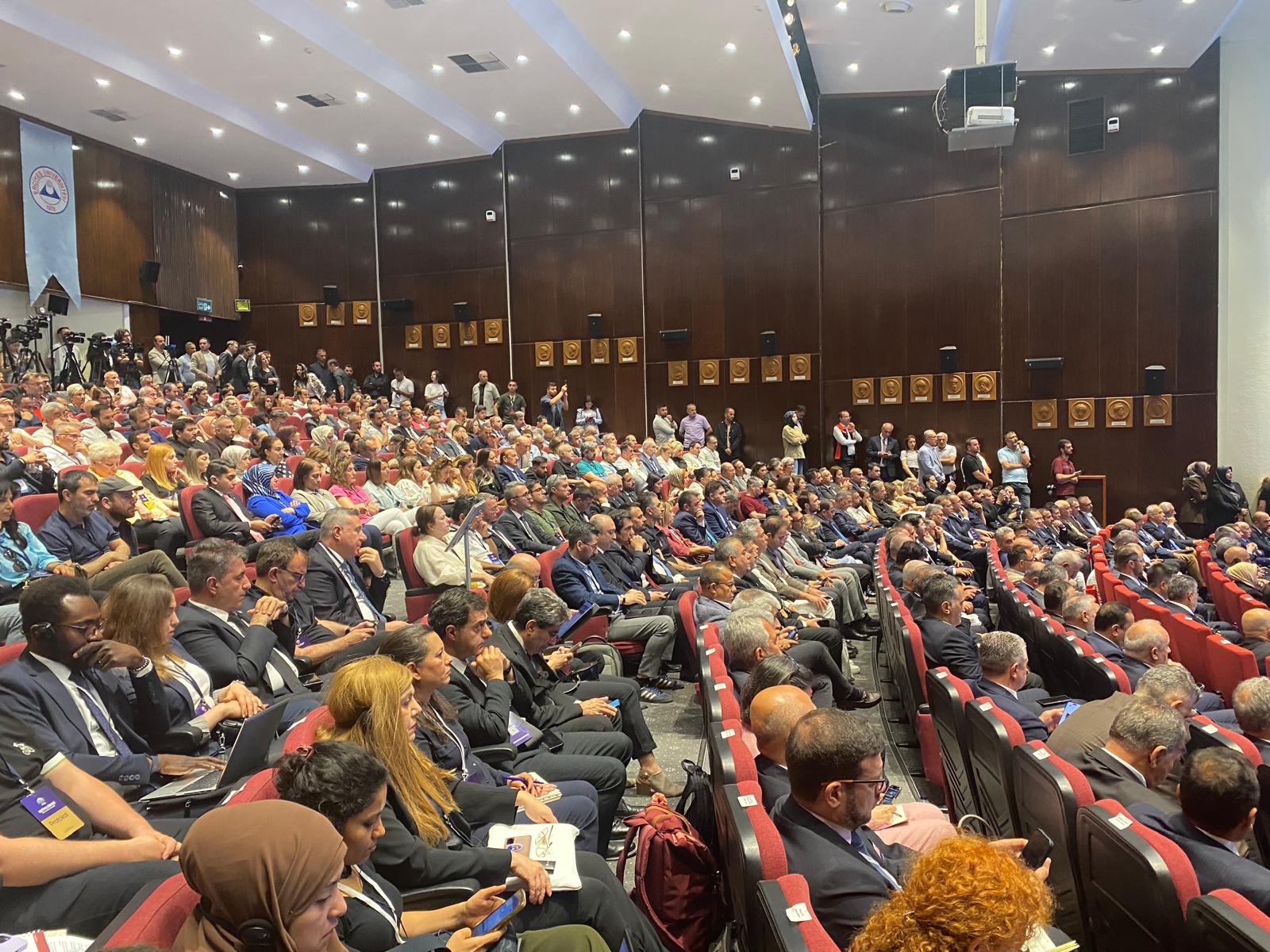
The event, attended by experts from the United Nations, the World Bank, the FAO, the World Food Program, universities, research institutions, and public agencies, explored opportunities for cooperation and the search for joint solutions to global risks. Key topics highlighted at the summit included establishing resilient production systems, the effective management of water resources, accelerating investments in green and digital transformation, and strengthening sustainable development policies.
In his closing remarks, Dr. Hulusi Akar stated that issues such as climate change, water management, and food security concern society as a whole and emphasized the need for a holistic approach in these areas. Akar highlighted the importance of fostering a culture of conservation, preventing waste, and maintaining a mindset of respect for resources.
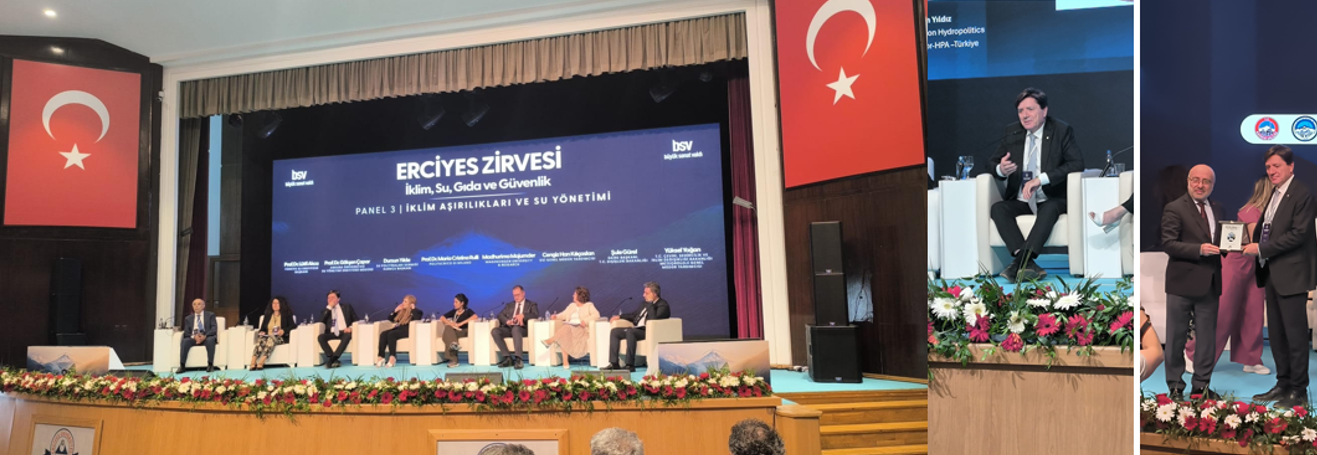
EXPERTS SHARED THEIR VIEWS ACROSS FOUR SEPARATE PANELS
At the summit, topics related to Turkey’s climate, water, and food agenda were addressed in four separate panels. The “Climate Change and Geopolitics” panel evaluated the impacts of climate change on agricultural production and water resources, while the “Food Security” panel examined the economic, social, and strategic dimensions of food.
The “Climate Extremes and Water Management” panel discussed current and potential risks regarding water security, as well as proposed solutions. Meanwhile, the “Sustainable Development” panel—moderated by Ayşe Böhürler—addressed sustainable development goals, climate policies, and environmental governance.
DURSUN YILDIZ HIGHLIGHTED THE PARADIGM SHIFT IN TRANSBOUNDARY WATER MANAGEMENT
Dursun Yıldız, President of the Hydropolitics Association and a hydropolitics expert, spoke at the “Climate Extremes and Water Management” panel during the summit, which was supported by the same association. In his address titled “The Impacts of Climate Change on Transboundary Water Management,” Yıldız noted significant differences between the approaches to transboundary water management in the 20th and 21st centuries. Summarizing the presentation he had prepared due to time constraints, Yıldız stated that the three key factors shaping 21st-century transboundary water policies would be uncertainty, policies linking water, energy, food, and the environment, and adaptive water management.
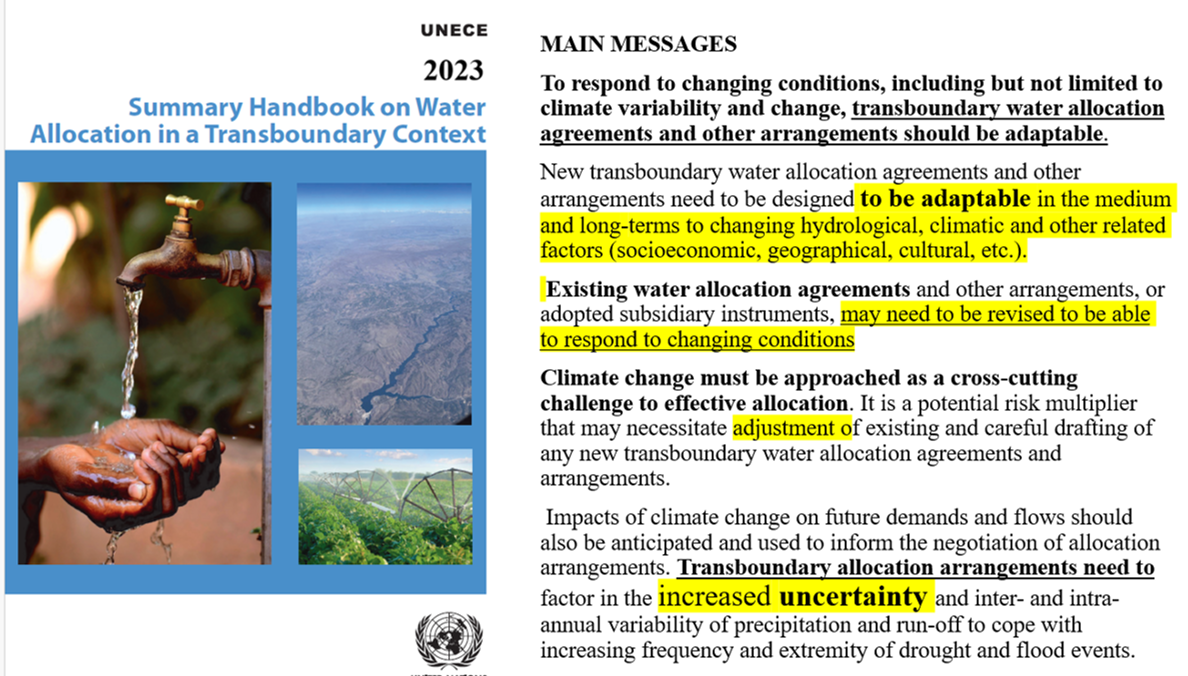
Yıldız stated, “Transboundary water agreements concluded in the 20th century did not take the impact of climate change into account. However, the General Directorate of State Hydraulic Works (DSİ) had raised this issue when evaluating the commitment Turkey made in 1987 to release an average of 500 m³/s of water to Syria. At that time, it was proposed that the principle of ‘variability of natural hydrological conditions’ be included in the agreement. Years later, handbooks and reports published by relevant UN agencies highlighted the need to revisit the issue of ‘water allocation in transboundary agreements in light of climate change.’ Most recently, the UNECE published two comprehensive reports on this subject in 2021 and 2023: *Water and Climate Change Adaptation in Transboundary Basins* and *Handbook on Water Allocation in a Transboundary Context*. These reports discuss uncertainty and adaptation in water management and recommend revising existing transboundary water agreements—as well as incorporating climate change considerations into future ones.”
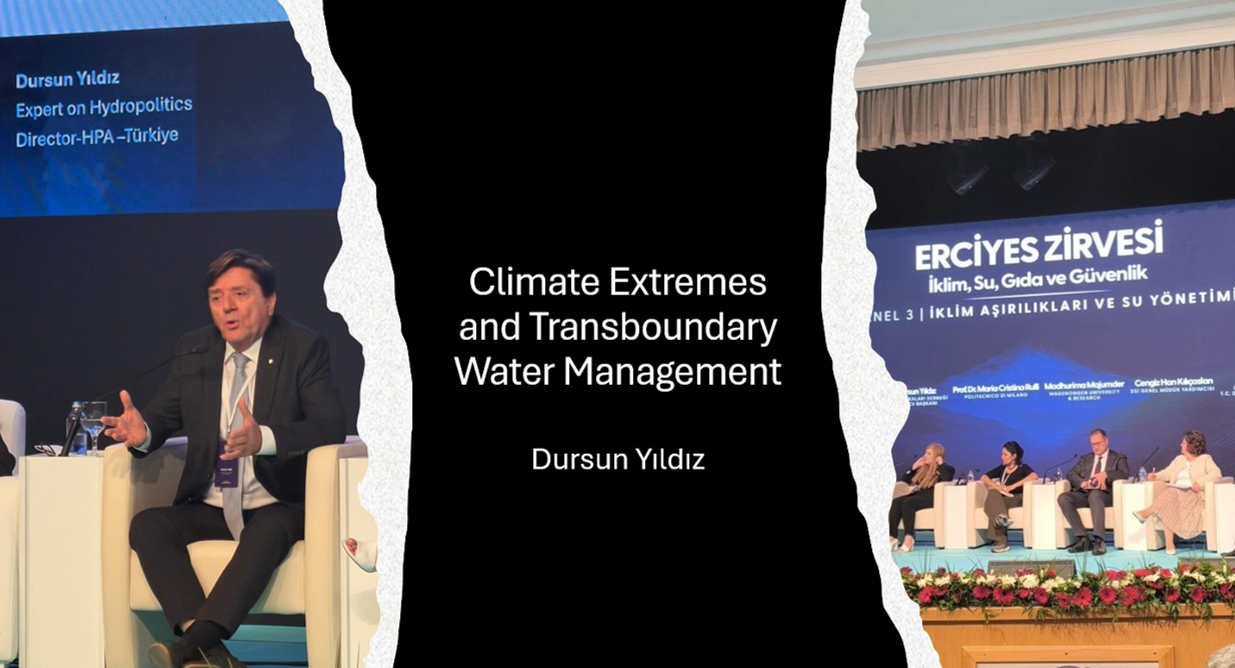
“THE FOCUS IS SHIFTING FROM SHARING WATER VOLUMES TO SHARING BENEFITS”
Dursun Yıldız noted that the climate, the international system, and concepts of security have undergone rapid changes since the beginning of the 21st century, and stated that these changes have also impacted transboundary water management. Yıldız stated, “These changes have also affected transboundary water management. Conflicts have jeopardized food security in certain regions, and the impact of climate change has intensified. Consequently, in transboundary water management, the focus has shifted from merely sharing water volumes to sharing the benefits derived from water and adopting a cooperative approach that addresses the Water-Energy-Food-Environment sectors holistically. It is essential for this approach to become widespread to ensure peace and stability.”
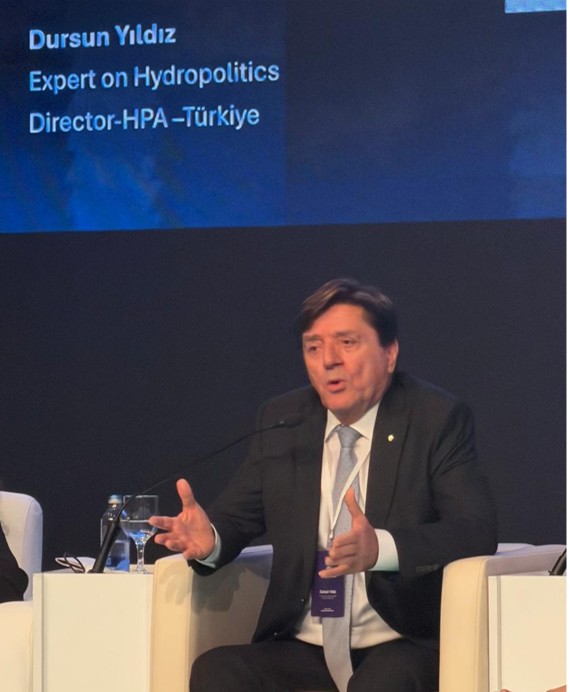
YILDIZ NOTED THAT WATER-RELATED TENSIONS COULD ALSO RISE DOMESTICALLY
Highlighting the importance of ensuring national water security amidst the impacts of climate change, Yıldız also commented on discussions regarding “water wars.” Yıldız stated, “Ensuring water security for nations under the influence of climate change is crucial. The most frequently asked question in this regard is, ‘Will a water war break out?’ Tensions over water will indeed arise between nations in the 21st century; however, a continuing shift in the paradigm of transboundary water management will help mitigate these tensions. Water wars rarely erupt solely over the direct sharing of water itself. Instead, water can be used as a tool—or a pretext for conflict—by external powers seeking to maintain dominance in water-scarce regions. Yet, these conflicts and tensions are likely to occur not just between nations, but between provinces and cities within countries facing water shortages due to climate change. Therefore, we must look beyond international tensions to domestic ones as well. For instance, a notable example in our country is the 2024 demand to revoke the water allocation granted to İzmir from sources within Manisa’s borders. Ultimately, the impact of climate change on water resources will intensify. This situation, combined with other pressures, necessitates a shift in the water management paradigm for transboundary basins to adapt to changing conditions. Without such a shift, the effects of climate change will strain water allocations—both domestically and internationally—and escalate tensions.”
EMPHASIS ON COOPERATION AT THE CONCLUSION OF THE SUMMIT
At the conclusion of the summit, the views and recommendations—shaped by the contributions of representatives from academia, the public sector, international organizations, and civil society—were shared with the public. The participants demonstrated a shared resolve to strengthen the search for joint solutions to global challenges and to develop new opportunities for cooperation.
The consensus reached at the summit highlighted the need to enhance national and international cooperation regarding climate change, water security, and food supply.
Reporter: Yaren Tekin
^
HPA President Yıldız spoke at Erciyes Summit-1: “ Transboundary Water Agreements must be updated to reflect the changing climate”
Speaking at the “Climate Extremes and Water Management” panel at Erciyes Summit-1, Dursun Yıldız, President of the Water Policy Association, noted the growing impact of climate change on transboundary water management and stated that existing water agreements need to be revisited in light of changing hydrological conditions and new risks.
Yaren Tekin
Correspondent
July 21 2026
Climate change, water management, food security, and sustainable development were addressed at the Erciyes Summit-1, hosted by Erciyes University, Kayseri, Türkiye. Speaking at the summit, Dursun Yıldız, President of the Hydropolitics Association and a hydropolitics expert, stated that climate change directly impacts transboundary water management and emphasized the need to re-evaluate 20th-century water agreements in light of new conditions.
CLIMATE, WATER, AND FOOD AGENDAS ADDRESSED AT THE ERCIYES SUMMIT-1
Erciyes Summit-1, hosted by Erciyes University and coordinated by AK Party Kayseri MP and Chairman of the TBMM National Defense Commission Dr. Hulusi Akar and AK Party Kayseri MP Ayşe Böhürler, has concluded. Held under the theme “Climate, Water, Food, and Security,” the summit examined the topics of climate change, water security, food supply, and sustainable development from a multidimensional perspective.
The event, attended by experts from the United Nations, the World Bank, the FAO, the World Food Program, universities, research institutions, and public agencies, explored opportunities for cooperation and the search for joint solutions to global risks. Key topics highlighted at the summit included establishing resilient production systems, the effective management of water resources, accelerating investments in green and digital transformation, and strengthening sustainable development policies.
In his closing remarks, Dr. Hulusi Akar stated that issues such as climate change, water management, and food security concern society as a whole and emphasized the need for a holistic approach in these areas. Akar highlighted the importance of fostering a culture of conservation, preventing waste, and maintaining a mindset of respect for resources.
EXPERTS SHARED THEIR VIEWS ACROSS FOUR SEPARATE PANELS
At the summit, topics related to Turkey’s climate, water, and food agenda were addressed in four separate panels. The “Climate Change and Geopolitics” panel evaluated the impacts of climate change on agricultural production and water resources, while the “Food Security” panel examined the economic, social, and strategic dimensions of food.
The “Climate Extremes and Water Management” panel discussed current and potential risks regarding water security, as well as proposed solutions. Meanwhile, the “Sustainable Development” panel—moderated by Ayşe Böhürler—addressed sustainable development goals, climate policies, and environmental governance.
DURSUN YILDIZ HIGHLIGHTED THE PARADIGM SHIFT IN TRANSBOUNDARY WATER MANAGEMENT
Dursun Yıldız, President of the Hydropolitics Association and a hydropolitics expert, spoke at the “Climate Extremes and Water Management” panel during the summit, which was supported by the same association. In his address titled “The Impacts of Climate Change on Transboundary Water Management,” Yıldız noted significant differences between the approaches to transboundary water management in the 20th and 21st centuries. Summarizing the presentation he had prepared due to time constraints, Yıldız stated that the three key factors shaping 21st-century transboundary water policies would be uncertainty, policies linking water, energy, food, and the environment, and adaptive water management.
Yıldız stated, “Transboundary water agreements concluded in the 20th century did not take the impact of climate change into account. However, the General Directorate of State Hydraulic Works (DSİ) had raised this issue when evaluating the commitment Turkey made in 1987 to release an average of 500 m³/s of water to Syria. At that time, it was proposed that the principle of ‘variability of natural hydrological conditions’ be included in the agreement. Years later, handbooks and reports published by relevant UN agencies highlighted the need to revisit the issue of ‘water allocation in transboundary agreements in light of climate change.’ Most recently, the UNECE published two comprehensive reports on this subject in 2021 and 2023: *Water and Climate Change Adaptation in Transboundary Basins* and *Handbook on Water Allocation in a Transboundary Context*. These reports discuss uncertainty and adaptation in water management and recommend revising existing transboundary water agreements—as well as incorporating climate change considerations into future ones.”
“THE FOCUS IS SHIFTING FROM SHARING WATER VOLUMES TO SHARING BENEFITS”
Dursun Yıldız noted that the climate, the international system, and concepts of security have undergone rapid changes since the beginning of the 21st century, and stated that these changes have also impacted transboundary water management. Yıldız stated, “These changes have also affected transboundary water management. Conflicts have jeopardized food security in certain regions, and the impact of climate change has intensified. Consequently, in transboundary water management, the focus has shifted from merely sharing water volumes to sharing the benefits derived from water and adopting a cooperative approach that addresses the Water-Energy-Food-Environment sectors holistically. It is essential for this approach to become widespread to ensure peace and stability.”
YILDIZ NOTED THAT WATER-RELATED TENSIONS COULD ALSO RISE DOMESTICALLY
Highlighting the importance of ensuring national water security amidst the impacts of climate change, Yıldız also commented on discussions regarding “water wars.” Yıldız stated, “Ensuring water security for nations under the influence of climate change is crucial. The most frequently asked question in this regard is, ‘Will a water war break out?’ Tensions over water will indeed arise between nations in the 21st century; however, a continuing shift in the paradigm of transboundary water management will help mitigate these tensions. Water wars rarely erupt solely over the direct sharing of water itself. Instead, water can be used as a tool—or a pretext for conflict—by external powers seeking to maintain dominance in water-scarce regions. Yet, these conflicts and tensions are likely to occur not just between nations, but between provinces and cities within countries facing water shortages due to climate change. Therefore, we must look beyond international tensions to domestic ones as well. For instance, a notable example in our country is the 2024 demand to revoke the water allocation granted to İzmir from sources within Manisa’s borders. Ultimately, the impact of climate change on water resources will intensify. This situation, combined with other pressures, necessitates a shift in the water management paradigm for transboundary basins to adapt to changing conditions. Without such a shift, the effects of climate change will strain water allocations—both domestically and internationally—and escalate tensions.”
EMPHASIS ON COOPERATION AT THE CONCLUSION OF THE SUMMIT
At the conclusion of the summit, the views and recommendations—shaped by the contributions of representatives from academia, the public sector, international organizations, and civil society—were shared with the public. The participants demonstrated a shared resolve to strengthen the search for joint solutions to global challenges and to develop new opportunities for cooperation.
The consensus reached at the summit highlighted the need to enhance national and international cooperation regarding climate change, water security, and food supply.
Reporter: Yaren Tekin
^
