

Climate Change and Hydropolitics
Dursun Yıldız
Director
HPA
25 Ocak 2026
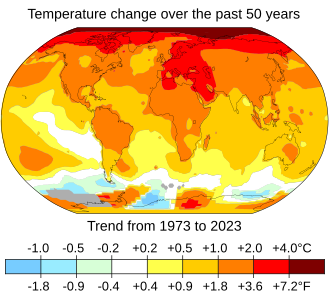
Climate change is acting as a hydropolitical risk multiplier. Rising temperatures, shifting precipitation regimes, and more frequent extremes are reducing water availability and increasing uncertainty in shared river basins. Existing water governance frameworks—largely designed for a stable climate—are increasingly misaligned with today’s realities.
Hydrological variability is rising; historical flow records no longer provide reliable planning baselines. Upstream–downstream asymmetries are intensifying as storage and control infrastructure gain strategic value. Competition across the Water–Energy–Food Nexus sectors amplifies political sensitivity.
We need to shift from control to risk management. Conflicts often emerge when water is treated as a zero-sum asset. Climate change makes this approach untenable. Therefore, moving from fixed allocations to risk-sharing frameworks is necessary. We need to manage variability rather than historical averages and frame water as a shared climate risk, not a sovereign commodity
In a changing climate, hydropolitics is no longer about controlling water flows—it is about collectively managing uncertainty. Countries and basins that embed flexibility, cooperation, and climate intelligence into water governance will be more resilient, stable, and secure.
Climate change transforms water from a development resource into a strategic variable. Hydropolitics in the 21st century will be less about “who controls the river” and more about who manages uncertainty better. Cooperation, flexibility, and climate-informed governance are no longer optional—they are essential for regional stability.
^
Climate Change and Hydropolitics
Dursun Yıldız
Director
HPA
25 Ocak 2026
Climate change is acting as a hydropolitical risk multiplier. Rising temperatures, shifting precipitation regimes, and more frequent extremes are reducing water availability and increasing uncertainty in shared river basins. Existing water governance frameworks—largely designed for a stable climate—are increasingly misaligned with today’s realities.
Hydrological variability is rising; historical flow records no longer provide reliable planning baselines. Upstream–downstream asymmetries are intensifying as storage and control infrastructure gain strategic value. Competition across the Water–Energy–Food Nexus sectors amplifies political sensitivity.
We need to shift from control to risk management. Conflicts often emerge when water is treated as a zero-sum asset. Climate change makes this approach untenable. Therefore, moving from fixed allocations to risk-sharing frameworks is necessary. We need to manage variability rather than historical averages and frame water as a shared climate risk, not a sovereign commodity
In a changing climate, hydropolitics is no longer about controlling water flows—it is about collectively managing uncertainty. Countries and basins that embed flexibility, cooperation, and climate intelligence into water governance will be more resilient, stable, and secure.
Climate change transforms water from a development resource into a strategic variable. Hydropolitics in the 21st century will be less about “who controls the river” and more about who manages uncertainty better. Cooperation, flexibility, and climate-informed governance are no longer optional—they are essential for regional stability.
^
