

Water Bankruptcy: The Formal Definition
Kaveh Madani1 Received: 11 December 2025 / Accepted: 29 December 2025 © The Author(s) 2026
Abstract
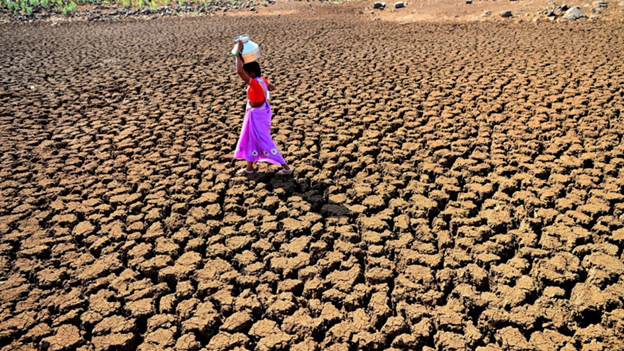
“Water crisis” has become the default label for almost any episode of water stress, from short-lived droughts to decades-long overuse of rivers and aquifers. Yet in many regions of the world, water problems no longer resemble a crisis in the conventional sense. They represent a post-crisis failure state in which human–water systems have exceeded their hydrological carrying capacities, and societies have spent beyond their sustainable hydro logical budgets for so long that critical water assets are depleted, some ecosystem damages are irreversible on human time scales, and a return to “normal” is infeasible even with pro hibitive economic, social, and environmental costs. This paper proposes Water Bankruptcy as a more meaningful and useful term for this condition and provides the first formal, scientific definition of this concept grounded in hydrology, ecology, and socio-economics. Water bankruptcy is presented not only as a metaphor to communicate the severity of the problem and the urgency of a transformative fresh start, but also as a diagnostic label for human–water systems whose water use persistently exceeds hydrological carrying capac ity (insolvency), eroding the water and natural capital to the extent that some damages are irreparable (irreversibility). Drawing on a bank-account analogy that likens surface water to a checking account and groundwater to a savings account, the paper explains why language matters for policy outreach and public discourse and discusses why bankruptcy framing calls for not only protecting water but also the natural capital and hydrological cycle that produce it. It also outlines the misleading policy implications of terms such as stress, crisis, or emergency in reference to the state of systems that can no longer restore their baseline conditions. While the focus of the paper is on water, the underlying discus sions and framing are applicable to other natural systems facing insolvency and irrevers ibility under human pressure, including the climate system.
Keywords Water bankruptcy · Water crisis · Water stress · Water governance · Integrated water resources management (IWRM) · Human-water systems
. To read the full article, please click on
/wp-content/uploads/2026/07/Water%20Bankruptcy%20The%20Formal%20Definition.pdf
^
Water Bankruptcy: The Formal Definition
Kaveh Madani1 Received: 11 December 2025 / Accepted: 29 December 2025 © The Author(s) 2026
Abstract
“Water crisis” has become the default label for almost any episode of water stress, from short-lived droughts to decades-long overuse of rivers and aquifers. Yet in many regions of the world, water problems no longer resemble a crisis in the conventional sense. They represent a post-crisis failure state in which human–water systems have exceeded their hydrological carrying capacities, and societies have spent beyond their sustainable hydro logical budgets for so long that critical water assets are depleted, some ecosystem damages are irreversible on human time scales, and a return to “normal” is infeasible even with pro hibitive economic, social, and environmental costs. This paper proposes Water Bankruptcy as a more meaningful and useful term for this condition and provides the first formal, scientific definition of this concept grounded in hydrology, ecology, and socio-economics. Water bankruptcy is presented not only as a metaphor to communicate the severity of the problem and the urgency of a transformative fresh start, but also as a diagnostic label for human–water systems whose water use persistently exceeds hydrological carrying capac ity (insolvency), eroding the water and natural capital to the extent that some damages are irreparable (irreversibility). Drawing on a bank-account analogy that likens surface water to a checking account and groundwater to a savings account, the paper explains why language matters for policy outreach and public discourse and discusses why bankruptcy framing calls for not only protecting water but also the natural capital and hydrological cycle that produce it. It also outlines the misleading policy implications of terms such as stress, crisis, or emergency in reference to the state of systems that can no longer restore their baseline conditions. While the focus of the paper is on water, the underlying discus sions and framing are applicable to other natural systems facing insolvency and irrevers ibility under human pressure, including the climate system.
Keywords Water bankruptcy · Water crisis · Water stress · Water governance · Integrated water resources management (IWRM) · Human-water systems
. To read the full article, please click on
/wp-content/uploads/2026/07/Water%20Bankruptcy%20The%20Formal%20Definition.pdf
^
