

The water crisis has also impacted energy in the Euphrates and Tigris Basin : “Electricity production has decreased by 25 percent in 30 years.”
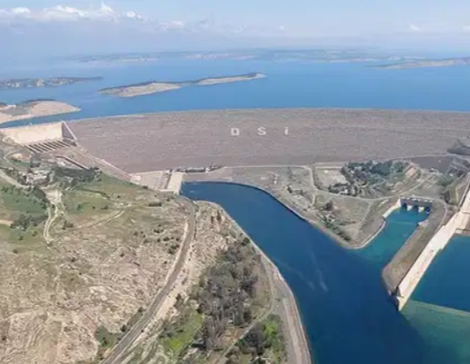
The climate crisis and lack of planning have exposed not only the water but also the energy crisis. The amount produced at the Atatürk Dam, which meets a significant portion of Turkey’s electricity needs, fell below 5.5 billion kilowatt-hours in 2022, 2023, and 2024.
28.10.2025
Çağdaş Bayraktar
The climate crisis and lack of planning have exposed not only the water but also the energy crisis.
The amount produced at the Atatürk Dam, which meets a significant portion of Türkiye’s electricity needs, fell below 5.5 billion kilowatt-hours in 2022, 2023, and 2024. The dam produced over 10 billion kilowatt-hours of electricity annually in 1996, 1997, and 1998.
Meanwhile, in Iraq, which faces similar challenges, the government requested that Türkiye increase the amount of water flowing from the Tigris and Euphrates rivers by 1 billion cubic meters per month in October and November.
“HALF OF HYDROELECTRIC ENERGY”
Speaking to Cumhuriyet, Dursun Yıldız, President of the Hydropolitics Association, stated that the dams in the Euphrates-Tigris basin, which account for 30 percent of the flowing water, have the capacity to generate half of the hydroelectric energy.
“However, the electrical energy generated from these dams is gradually decreasing,” Yıldız said, adding, “The total electricity we generate from the Keban, Karakaya, and Atatürk Dams has decreased by an average of 25 percent over the last 30 years compared to the initial years.”
A HALF-DECREASE
Yıldız stated that Atatürk Dam’s electricity production, which was 10.5 billion kWh in 1998, has fallen to 3.7 billion kWh in 2021, 3.4 billion kWh in 2022, 3.2 billion kWh in 2023, and 5.4 billion kWh in 2024. He said, “This decline is of great concern to our country, both economically and hydropolitically. The decline in electricity production appears to be strongly correlated with the droughts experienced in the region.”
“A NEW MODEL IS NECESSARY “
Yıldız, highlighting the Agricultural Frost Commission Workshop Report prepared by the Turkish Grand National Assembly, said:
“According to the report, the Southeastern Anatolia region will also be affected by drought in the coming years. Water-energy and climate policies should be integrated in the Tigris-Euphrates Basin, and drought action plan measures should be implemented now. Failure to take these measures could lead to losses in energy production and agricultural yields, disruption of the ecological balance, decline in groundwater levels, rural migration, and hydropolitical tensions with downstream countries.”
For these reasons, a basin management model that integrates water, energy and climate policies should be rapidly adopted in the Tigris and Euphrates Basins.”
Source:https://www.cumhuriyet.com.tr/
^
The water crisis has also impacted energy in the Euphrates and Tigris Basin : “Electricity production has decreased by 25 percent in 30 years.”
The climate crisis and lack of planning have exposed not only the water but also the energy crisis. The amount produced at the Atatürk Dam, which meets a significant portion of Turkey’s electricity needs, fell below 5.5 billion kilowatt-hours in 2022, 2023, and 2024.
28.10.2025
Çağdaş Bayraktar
The climate crisis and lack of planning have exposed not only the water but also the energy crisis.
The amount produced at the Atatürk Dam, which meets a significant portion of Türkiye’s electricity needs, fell below 5.5 billion kilowatt-hours in 2022, 2023, and 2024. The dam produced over 10 billion kilowatt-hours of electricity annually in 1996, 1997, and 1998.
Meanwhile, in Iraq, which faces similar challenges, the government requested that Türkiye increase the amount of water flowing from the Tigris and Euphrates rivers by 1 billion cubic meters per month in October and November.
“HALF OF HYDROELECTRIC ENERGY”
Speaking to Cumhuriyet, Dursun Yıldız, President of the Hydropolitics Association, stated that the dams in the Euphrates-Tigris basin, which account for 30 percent of the flowing water, have the capacity to generate half of the hydroelectric energy.
“However, the electrical energy generated from these dams is gradually decreasing,” Yıldız said, adding, “The total electricity we generate from the Keban, Karakaya, and Atatürk Dams has decreased by an average of 25 percent over the last 30 years compared to the initial years.”
A HALF-DECREASE
Yıldız stated that Atatürk Dam’s electricity production, which was 10.5 billion kWh in 1998, has fallen to 3.7 billion kWh in 2021, 3.4 billion kWh in 2022, 3.2 billion kWh in 2023, and 5.4 billion kWh in 2024. He said, “This decline is of great concern to our country, both economically and hydropolitically. The decline in electricity production appears to be strongly correlated with the droughts experienced in the region.”
“A NEW MODEL IS NECESSARY “
Yıldız, highlighting the Agricultural Frost Commission Workshop Report prepared by the Turkish Grand National Assembly, said:
“According to the report, the Southeastern Anatolia region will also be affected by drought in the coming years. Water-energy and climate policies should be integrated in the Tigris-Euphrates Basin, and drought action plan measures should be implemented now. Failure to take these measures could lead to losses in energy production and agricultural yields, disruption of the ecological balance, decline in groundwater levels, rural migration, and hydropolitical tensions with downstream countries.”
For these reasons, a basin management model that integrates water, energy and climate policies should be rapidly adopted in the Tigris and Euphrates Basins.”
Source:https://www.cumhuriyet.com.tr/
^
