
Ethiopia’s Controversial Dam (GERD) Completed: What Happens Next?
Dursun Yıldız – Director, Hydropolitics Academy Center, Turkey
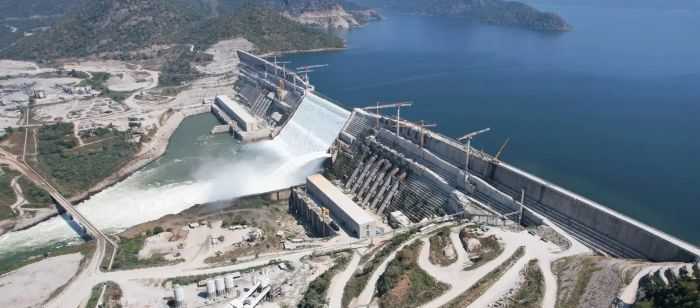
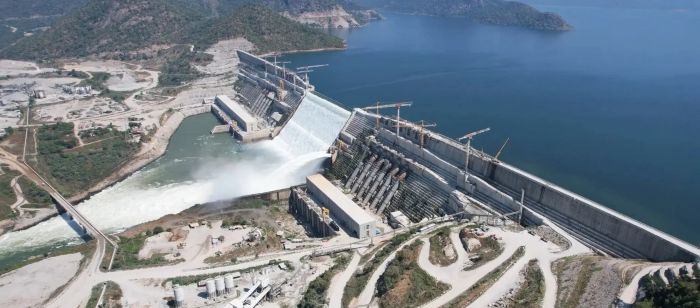
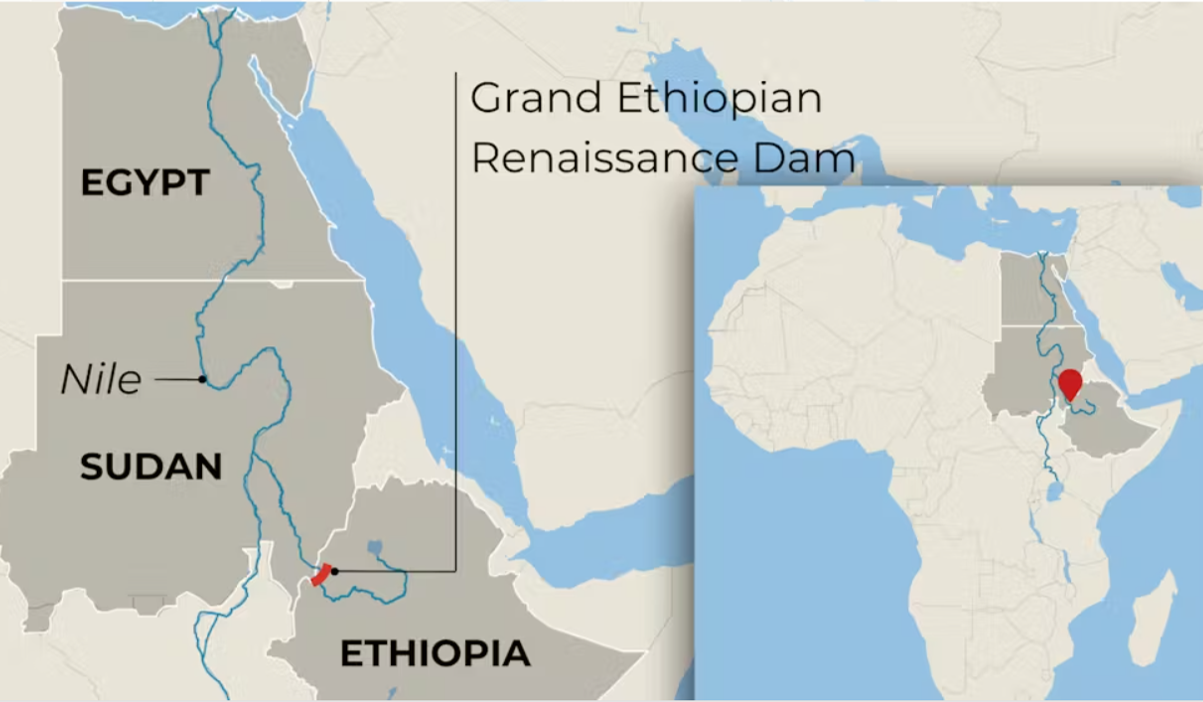
In April 2011, Ethiopia began construction of Africa’s largest hydroelectric dam, the Grand Ethiopian Renaissance Dam (GERD), on the Blue Nile river. Ethiopia completed construction of the US$4 billion-plus project in July 2025, mainly with funds sourced from Ethiopians at home and in the diaspora, with an official launch on 9 September 2025.
On September 9, 2025, the Grand Ethiopian Renaissance Dam (GERD) was officially inaugurated. The completion of the dam marks a new phase in the upstream–downstream dynamics of the Nile Basin. For Ethiopia, GERD is more than electricity production: it is a symbol of economic development, regional power, and national unity.
Egypt’s Vulnerability and Collapse of Negotiations
Nearly 90% of its population lives along the Nile; more than 90% of its freshwater comes from the river. Under the 1959 Agreement, Egypt was allocated 55.5 bcm annually, yet its current needs are about 114 bcm. The absence of guaranteed releases during drought years is perceived as an existential threat. Ethiopia’s Strategy: With a full capacity of 5,150 MW, GERD will double the country’s power generation. Through electricity exports to Kenya, Sudan, South Sudan, and Djibouti, Ethiopia seeks to expand its regional influence. Talks since 2010 have failed. Ethiopia rejected the 2020 Washington draft agreement that included minimum release rules. The U.S. has lost credibility as a neutral mediator.
Negotiations have failed. How will the dam be operated?
Negotiations conducted by the African Union, the EU, and the US over the past 10 years have failed to yield results. A critical crisis in this regard has been how the dam will be operated during droughts. A draft draft prepared in Washington in 2020 during the negotiations included minimum water release rates. This proposal, accepted by Egypt and Sudan, was rejected by the latter. The draft was argued to be “too restrictive.” Cairo, however, insisted on a “fair balance.” This failure led to erosion of trust in subsequent negotiations. In 2023, Egypt declared the negotiation process “impassed,” and in 2025, US President Donald Trump’s statement that “the dam was built largely with US money” sparked outrage in Ethiopia. This situation led to the loss of confidence in the US as a mediator.
For credible third-party mediation, countries with stronger regional ties and economic clout, such as Türkiye and Saudi Arabia, appear to be more effective in re-enabling the diplomatic channel.
Hydro-Diplomacy Canals Must Be Activated
With the completion of the dam, the opening and operation of hydro-diplomacy canals has become a necessity. In this context, multilateral diplomatic efforts and trust-building will become increasingly important.
The door to diplomacy must be kept open, and efforts must be increased to ensure coordination, instant data sharing, and limit unilateral actions during dry years.
Because unilateral dam operation during dry periods will threaten agricultural production and drinking water security in Egypt and Sudan. Furthermore, a diplomatic vacuum will increase the risk of escalating regional tensions. In the new situation created by the dam’s completion, the only way out for both parties is to take confidence-building steps through hydro-diplomacy.
Shared regional development perspective can play an important role to activate hydro-diplomacy channels. Electricity exports and regional energy integration could transform the Nile waters from a source of conflict into a source of cooperation. Innovative hydropolitics is needed. Otherwise, the Nile basin will become the scene of increasingly fierce geopolitical competition.
^
Ethiopia’s Controversial Dam (GERD) Completed: What Happens Next?
Dursun Yıldız – Director, Hydropolitics Academy Center, Turkey
In April 2011, Ethiopia began construction of Africa’s largest hydroelectric dam, the Grand Ethiopian Renaissance Dam (GERD), on the Blue Nile river. Ethiopia completed construction of the US$4 billion-plus project in July 2025, mainly with funds sourced from Ethiopians at home and in the diaspora, with an official launch on 9 September 2025.
On September 9, 2025, the Grand Ethiopian Renaissance Dam (GERD) was officially inaugurated. The completion of the dam marks a new phase in the upstream–downstream dynamics of the Nile Basin. For Ethiopia, GERD is more than electricity production: it is a symbol of economic development, regional power, and national unity.
Egypt’s Vulnerability and Collapse of Negotiations
Nearly 90% of its population lives along the Nile; more than 90% of its freshwater comes from the river. Under the 1959 Agreement, Egypt was allocated 55.5 bcm annually, yet its current needs are about 114 bcm. The absence of guaranteed releases during drought years is perceived as an existential threat. Ethiopia’s Strategy: With a full capacity of 5,150 MW, GERD will double the country’s power generation. Through electricity exports to Kenya, Sudan, South Sudan, and Djibouti, Ethiopia seeks to expand its regional influence. Talks since 2010 have failed. Ethiopia rejected the 2020 Washington draft agreement that included minimum release rules. The U.S. has lost credibility as a neutral mediator.
Negotiations have failed. How will the dam be operated?
Negotiations conducted by the African Union, the EU, and the US over the past 10 years have failed to yield results. A critical crisis in this regard has been how the dam will be operated during droughts. A draft draft prepared in Washington in 2020 during the negotiations included minimum water release rates. This proposal, accepted by Egypt and Sudan, was rejected by the latter. The draft was argued to be “too restrictive.” Cairo, however, insisted on a “fair balance.” This failure led to erosion of trust in subsequent negotiations. In 2023, Egypt declared the negotiation process “impassed,” and in 2025, US President Donald Trump’s statement that “the dam was built largely with US money” sparked outrage in Ethiopia. This situation led to the loss of confidence in the US as a mediator.
For credible third-party mediation, countries with stronger regional ties and economic clout, such as Türkiye and Saudi Arabia, appear to be more effective in re-enabling the diplomatic channel.
Hydro-Diplomacy Canals Must Be Activated
With the completion of the dam, the opening and operation of hydro-diplomacy canals has become a necessity. In this context, multilateral diplomatic efforts and trust-building will become increasingly important.
The door to diplomacy must be kept open, and efforts must be increased to ensure coordination, instant data sharing, and limit unilateral actions during dry years.
Because unilateral dam operation during dry periods will threaten agricultural production and drinking water security in Egypt and Sudan. Furthermore, a diplomatic vacuum will increase the risk of escalating regional tensions. In the new situation created by the dam’s completion, the only way out for both parties is to take confidence-building steps through hydro-diplomacy.
Shared regional development perspective can play an important role to activate hydro-diplomacy channels. Electricity exports and regional energy integration could transform the Nile waters from a source of conflict into a source of cooperation. Innovative hydropolitics is needed. Otherwise, the Nile basin will become the scene of increasingly fierce geopolitical competition.
^
