

India-Pakistan Conflict. A Water War?
Dursun Yıldız
Hydropolitics Academy Director
29 May 2025

If we were to define this situation at the beginning, we could say that this latest crisis escalating in Kashmir is not a water crisis that will lead to a water war. The picture we face today is the beginning of a water strategy crisis carried out over the historical Kashmir issue and the threat of climate change. However, the possibility of this issue evolving into a real water war in the medium term is not low.
What Happened in the Basin in Terms of Hydropolitics?
India has carefully undermined the water sharing cooperation that it has kept away from political and military tensions until now. In other words, a tradition has been broken regarding a long-standing and exemplary transboundary water agreement. While India was putting its water card on the table, it used very careful language in written explanations, abeyanced the treaty, announced that it had cut off the water flowing through the dams for sediment cleaning and then opened the floodgates.
As a result, India has partially considered international water law and created a new hydrogeopolitical position in the Jammu and Kashmir region using limited military force. With this strategy, it has radically announced its new position on water sharing. India has also made a radical move in the field to review and renew the 1960 Indus Waters Treaty. For this purpose, it used the attack in which 26 tourists lost their lives as a starting point and rejected the proposal to investigate the terrorist attack and reduce tensions.
Pakistan has occasionally accused India of waging a “fifth-generation war” by releasing water from a dam on the border without notice that could cause flooding, a charge India denies.
Why Did It Happen Now?
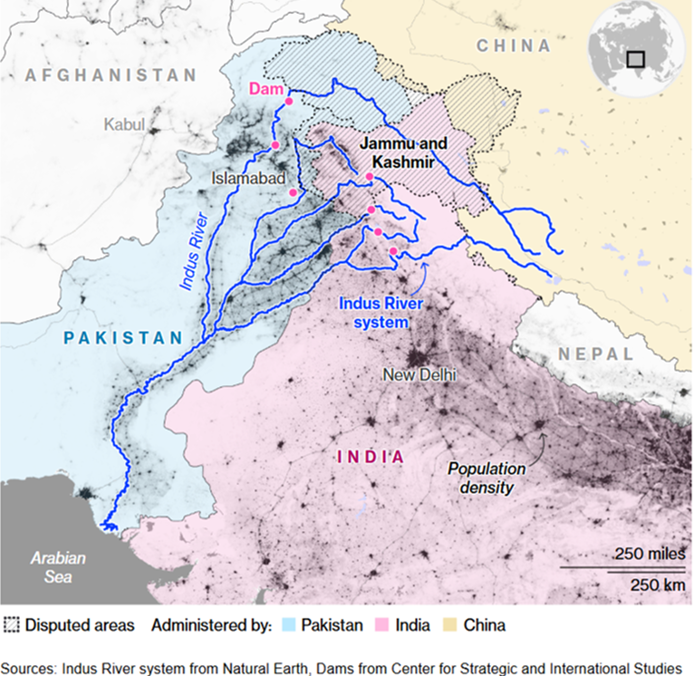
Starting from 1986, India has built many dams and small river type hydroenergy plants ranging from 40 m to 143 m height on the waters flowing to Pakistan. Even the highest Pakal Dul dam, which it has recently designed, is under construction, with a height of 167 m. Despite Pakistan’s objections that it is not in compliance with the agreement, these large dams, which were built, have strengthened India’s administrative dominance in the Jammu and Kashmir region and have also begun to provide it with the opportunity to control water. Although these dams have not yet reached the storage capacity to fully control the rivers waters, the fact that these dams have become silent strategic maneuvering tools for India has increased Pakistan’s concerns.
In fact, the construction of these large storage dams since 1989 has de facto undermined the Indus Waters Treaty. In line with these developments, India has attempted to create a new treaty by putting forward climate change, population growth and clean energy production policies. In this context, in recent years, it has increased its demands for the renewal of the Indus Waters Treaty. For this reason, in recent years, India has begun to move away from the policy of keeping the Kashmir tension away from water sharing. After an attack in 2016, it made an official statement that “blood and water do not flow together” and increased its threats to use the water card. Following the latest terrorist attack in Kashmir, India made clear its message that it will continue its policy of establishing hydrogeopolitical control in Kashmir by using limited military force and making statements that it has paused the Indus Waters Treaty.
On May 22, 2025, the Indian Prime Minister Modi said that Pakistan will not get water over which India has rights. This shows that India is decisive in continuing with the strategy it has created on this issue.
What Happens Next?
Water wars do not have long-term peaceful outcomes, so there will be no absolute and complete winner. In addition, military conflicts over water usually occur in regions where there is a historical dispute between riparian countries. Therefore, the risk of war over water sharing in the Indus Basin is not completely eliminated. However, for now, it can be said that a “full-scale water war” is a low possibility for some reasons.
In addition, Pakistan’s absolute dependence on waters originating from the Indian-controlled Jammu and Kashmir region in the Indus Basin makes the region very fragile in terms of water sharing. In other words, the region has a very critical security balance based on water.
In the Indus Basin, increasing conflicts between India and Pakistan regarding water will depend on;
- India’s Kashmir policy over water,
- The decrease in water resources due to the effects of climate change,
- The increasing water needs of economies largely based on agriculture in the region,
- Strategies that countries outside the region can implement over water.
In the Indus River basin, it is seen that instead of a water war in the short term and today, tense diplomacy, mutual threats and international mediations will be at the forefront. If the basin countries do not develop their hydro diplomatic relations in the medium and long term, if a new agreement acceptable to both parties cannot be made and if adaptation to climate change cannot be achieved, and if factors such as inefficient water management and extreme nationalism are not brought under control, the possibility of a water sharing war over the Kashmir dispute in the region will increase.
The historical Kashmir issue between India and Pakistan, which has come to affect water cooperation today, will have regional and global implications in terms of the securitization of transboundary waters. This emerging conflict is also important for Türkiye, which consists of approximately one-third of its waters that originate from transboundary and border-forming water basins, and should be followed carefully. The political uncertainties in the Middle East, where the majority of its waters originate from Turkey, and under the effect of the increasing impact of climate change, will challenge the sustainable management of transboundary water resources in the region.
PDF Version
/wp-content/uploads/2026/07/India-Pakistan%20Conflict_%20A%20Water%20War.pdf
^
India-Pakistan Conflict. A Water War?
Dursun Yıldız
Hydropolitics Academy Director
29 May 2025

If we were to define this situation at the beginning, we could say that this latest crisis escalating in Kashmir is not a water crisis that will lead to a water war. The picture we face today is the beginning of a water strategy crisis carried out over the historical Kashmir issue and the threat of climate change. However, the possibility of this issue evolving into a real water war in the medium term is not low.
What Happened in the Basin in Terms of Hydropolitics?
India has carefully undermined the water sharing cooperation that it has kept away from political and military tensions until now. In other words, a tradition has been broken regarding a long-standing and exemplary transboundary water agreement. While India was putting its water card on the table, it used very careful language in written explanations, abeyanced the treaty, announced that it had cut off the water flowing through the dams for sediment cleaning and then opened the floodgates.
As a result, India has partially considered international water law and created a new hydrogeopolitical position in the Jammu and Kashmir region using limited military force. With this strategy, it has radically announced its new position on water sharing. India has also made a radical move in the field to review and renew the 1960 Indus Waters Treaty. For this purpose, it used the attack in which 26 tourists lost their lives as a starting point and rejected the proposal to investigate the terrorist attack and reduce tensions.
Pakistan has occasionally accused India of waging a “fifth-generation war” by releasing water from a dam on the border without notice that could cause flooding, a charge India denies.
Why Did It Happen Now?
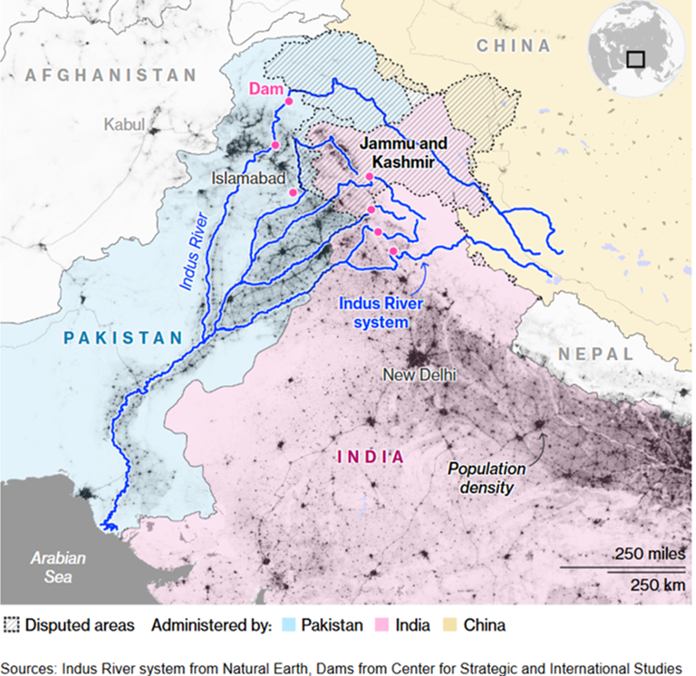
Starting from 1986, India has built many dams and small river type hydroenergy plants ranging from 40 m to 143 m height on the waters flowing to Pakistan. Even the highest Pakal Dul dam, which it has recently designed, is under construction, with a height of 167 m. Despite Pakistan’s objections that it is not in compliance with the agreement, these large dams, which were built, have strengthened India’s administrative dominance in the Jammu and Kashmir region and have also begun to provide it with the opportunity to control water. Although these dams have not yet reached the storage capacity to fully control the rivers waters, the fact that these dams have become silent strategic maneuvering tools for India has increased Pakistan’s concerns.
In fact, the construction of these large storage dams since 1989 has de facto undermined the Indus Waters Treaty. In line with these developments, India has attempted to create a new treaty by putting forward climate change, population growth and clean energy production policies. In this context, in recent years, it has increased its demands for the renewal of the Indus Waters Treaty. For this reason, in recent years, India has begun to move away from the policy of keeping the Kashmir tension away from water sharing. After an attack in 2016, it made an official statement that “blood and water do not flow together” and increased its threats to use the water card. Following the latest terrorist attack in Kashmir, India made clear its message that it will continue its policy of establishing hydrogeopolitical control in Kashmir by using limited military force and making statements that it has paused the Indus Waters Treaty.
On May 22, 2025, the Indian Prime Minister Modi said that Pakistan will not get water over which India has rights. This shows that India is decisive in continuing with the strategy it has created on this issue.
What Happens Next?
Water wars do not have long-term peaceful outcomes, so there will be no absolute and complete winner. In addition, military conflicts over water usually occur in regions where there is a historical dispute between riparian countries. Therefore, the risk of war over water sharing in the Indus Basin is not completely eliminated. However, for now, it can be said that a “full-scale water war” is a low possibility for some reasons.
In addition, Pakistan’s absolute dependence on waters originating from the Indian-controlled Jammu and Kashmir region in the Indus Basin makes the region very fragile in terms of water sharing. In other words, the region has a very critical security balance based on water.
In the Indus Basin, increasing conflicts between India and Pakistan regarding water will depend on;
- India’s Kashmir policy over water,
- The decrease in water resources due to the effects of climate change,
- The increasing water needs of economies largely based on agriculture in the region,
- Strategies that countries outside the region can implement over water.
In the Indus River basin, it is seen that instead of a water war in the short term and today, tense diplomacy, mutual threats and international mediations will be at the forefront. If the basin countries do not develop their hydro diplomatic relations in the medium and long term, if a new agreement acceptable to both parties cannot be made and if adaptation to climate change cannot be achieved, and if factors such as inefficient water management and extreme nationalism are not brought under control, the possibility of a water sharing war over the Kashmir dispute in the region will increase.
The historical Kashmir issue between India and Pakistan, which has come to affect water cooperation today, will have regional and global implications in terms of the securitization of transboundary waters. This emerging conflict is also important for Türkiye, which consists of approximately one-third of its waters that originate from transboundary and border-forming water basins, and should be followed carefully. The political uncertainties in the Middle East, where the majority of its waters originate from Turkey, and under the effect of the increasing impact of climate change, will challenge the sustainable management of transboundary water resources in the region.
PDF Version
/wp-content/uploads/2026/07/India-Pakistan%20Conflict_%20A%20Water%20War.pdf
^
