
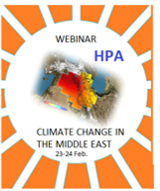

Global Climate Change Impacts on Tigris-Euphrates Rivers Basin and how to respond it
13 02 2021
Climate change is affecting the hydrological cycle all over the World. The effect on arid and semi-arid regions is relatively more. The Middle East and North Africa region is one of the biggest hyper-arid, semi-arid and arid zones in the world where the long-term average precipitation does not exceed 166mm per year. The Tigris and Euphrates basins are located within the northern part of the Middle East. Future projections indicate the considerable reduction in water resources as a result of drought and population growth. North Atlantic Oscillation (NAO) is responsible for the change in climate over the Tigris and Euphrates basins.
This is causing a decrease in rainfall and a consequence decrease in the flow of the rivers. In addition, the temperature is increasing. All these variables are causing sea level rise, increasing dust storms and deletion of groundwater resources.
It is believed that quick actions are required to minimize the effect of climate change.
Middle East is a region with high levels of climate vulnerability. It is characterised by high population density, high population growth, the rapid spread of urbanization, scarce water resources, faltering agriculture, declining fisheries in addition to substantial societal and economical transitions and armed conflicts in some countries. These factors make the Middle East high risk from the consequences of rapid climate change.
This webinar will help to raise more awareness on the issue and create a muttualy benefical approach in the region
^
Global Climate Change Impacts on Tigris-Euphrates Rivers Basin and how to respond it
13 02 2021
Climate change is affecting the hydrological cycle all over the World. The effect on arid and semi-arid regions is relatively more. The Middle East and North Africa region is one of the biggest hyper-arid, semi-arid and arid zones in the world where the long-term average precipitation does not exceed 166mm per year. The Tigris and Euphrates basins are located within the northern part of the Middle East. Future projections indicate the considerable reduction in water resources as a result of drought and population growth. North Atlantic Oscillation (NAO) is responsible for the change in climate over the Tigris and Euphrates basins.
This is causing a decrease in rainfall and a consequence decrease in the flow of the rivers. In addition, the temperature is increasing. All these variables are causing sea level rise, increasing dust storms and deletion of groundwater resources.
It is believed that quick actions are required to minimize the effect of climate change.
Middle East is a region with high levels of climate vulnerability. It is characterised by high population density, high population growth, the rapid spread of urbanization, scarce water resources, faltering agriculture, declining fisheries in addition to substantial societal and economical transitions and armed conflicts in some countries. These factors make the Middle East high risk from the consequences of rapid climate change.
This webinar will help to raise more awareness on the issue and create a muttualy benefical approach in the region
^
